
the Creative Commons Attribution 4.0 License.
the Creative Commons Attribution 4.0 License.
 | 15 Dec 2025
IODP3 Expedition 503 “Hadal Trench Tsunamigenic Slip History” Scientific Prospectus
Ken Ikehara
Michael Strasser
Lena Maeda
Hadal oceanic trenches are the deepest places on our planet. They form due to downward bending of subducting ocean crust along subduction zones, act as terminal sinks for sediment and particulate and dissolved organic carbon, and form high-resolution archives to unravel the history of subduction zone processes including subduction megathrust earthquakes and tsunamis. To fill the gap in long-term paleoseismic records of giant (Mw 9-class) subduction zone earthquakes, such as the Tōhoku-oki earthquake in 2011, International Ocean Discovery Program (IODP) Expedition 386 successfully collected 29 giant piston cores at 15 sites along the hadal Japan Trench at more than 7500 m water depth, recovering up to 37.82 m long, continuous successions spanning a few thousand to ∼ 20 000 years from 11 individual trench-fill basins. The record comprises numerous earthquake-related event deposits and has revealed new findings of earthquake-triggered carbon export to the hadal zone and dissolved carbon cycles stimulating intensive microbial activity in trench sediments. Yet, the record only covers the top 40 m of the up to ∼ 160 m thick trench-fill sequence that is expected to comprise a much longer earthquake record and offer further clues about hadal-zone element cycles.
Furthermore, in central Japan Trench (cJT) basins, trench-fill sediment sequences are characterised by several slightly tilted prominent seismic reflections with high amplitudes in multi-channel seismic profiles. Tilts become larger with increasing sub-bottom depths, suggesting periodic tilting events. The respective event time horizons link to buried trench-fill deformation structures and correlative ponded depositional units hypothesised to have resulted from large coseismic slip propagation to the trench and large-scale sediment remobilisation associated with strong seafloor shaking induced by past megathrust earthquakes. The youngest slip-to-the-trench event horizon is correlative with the base of a thick turbidite bed of the 869 CE Jōgan earthquake, which was a major earthquake event before the 2011 CE earthquake. However, due to limited coring depth so far, it is impossible to date the older hypothesised slip-to-the-trench events.
International Ocean Drilling Programme (IODP3) Expedition 503 plans to drill a trench basin in the cJT to recover the whole trench-fill sequence for dating and establishing event stratigraphy for paleoseismologic interpretations and further investigations of earthquake-related element cycles in a hadal trench environment. Combining the stratigraphy and chronology of thick event deposits, interstitial-water geochemistry proxy data for past fluid flow pulses, and core-to-seismic correlation with paleo-slip-to-the-trench events, we would like to clarify how often the slip-to-the-trench events have occurred. Unravelling the complete trench-fill sedimentary record and pore water profile will significantly advance our understanding of the nature and recurrence of hadal trench tsunamigenic slip and the underlying megathrust earthquakes and related geohazards, as well as the effects on enhancing carbon accumulation in the hadal trench that may stimulate carbon transformation and eventual export into the subduction zone.
- Article
(13035 KB) - Full-text XML
- BibTeX
- EndNote


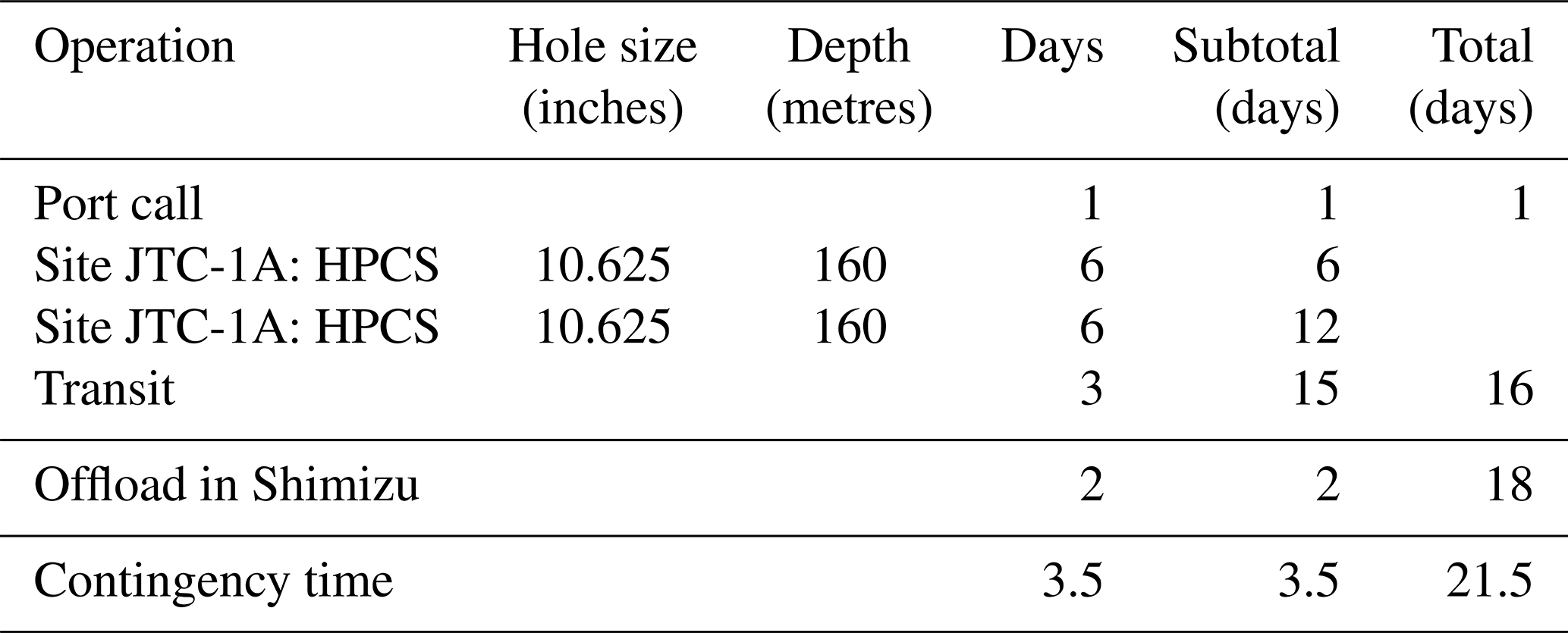
International Ocean Drilling Programme (IODP3) Expedition 503 is based on IODP drilling proposal 1010-APL2 (Ikehara et al., 2024; https://www.iodp.org/docs/proposals/1244-1010-apl2-ikehara-cover/file, last access: 30 May 2025). Following evaluation by the IODP Scientific Advisory Structure, the expedition is scheduled for D/V Chikyu, operated under contract with the Institute for Marine-Earth Exploration and Engineering (MarE3) at the Japan Agency for Marine-Earth Science and Technology (JAMSTEC). At the time of publication of this scientific prospectus, the expedition is scheduled in 2025, starting on 24 November 2025 and ending on 12 December 2025. A total of 16 (not including 3.5 contingency) days will be available for the transit, drilling, and coring, described in this report. Due to the expected high core recovery rate and short transit times, the offshore part of the expedition is expected to be followed by several days of finalising shipboard work and personal sampling, depending on core recovery rates and the availability of D/V Chikyu in Shimizu, Japan. Further details on Chikyu can be found here: https://www.jamstec.go.jp/e/about/equipment/ships/chikyu.html (last access: 30 May 2025).
The 2011 Mw 9.0 Tōhoku-oki earthquake and tsunami comprised a catastrophic geological event with major societal consequences. Unexpectedly shallow and large coseismic slip to the trench contributed to the large tsunami (Ide et al., 2011; Kodaira et al., 2021; Fig. 1). The global average for an Mw 8-class earthquake is one earthquake per year, and only four “giant” (Mw 9-class) earthquakes are well documented by instrumental data, which makes our understanding of giant earthquakes limited. The long recurrence intervals of these catastrophic events result in a poor applicability of instrumental and historical records. Therefore, it is difficult to answer important questions such as what are the effects of giant earthquakes and how often should we expect them. The geological record is a promising tool for reconstructing the history of giant earthquakes with long recurrence intervals and for helping reduce epistemic uncertainties in seismic-hazard assessment.
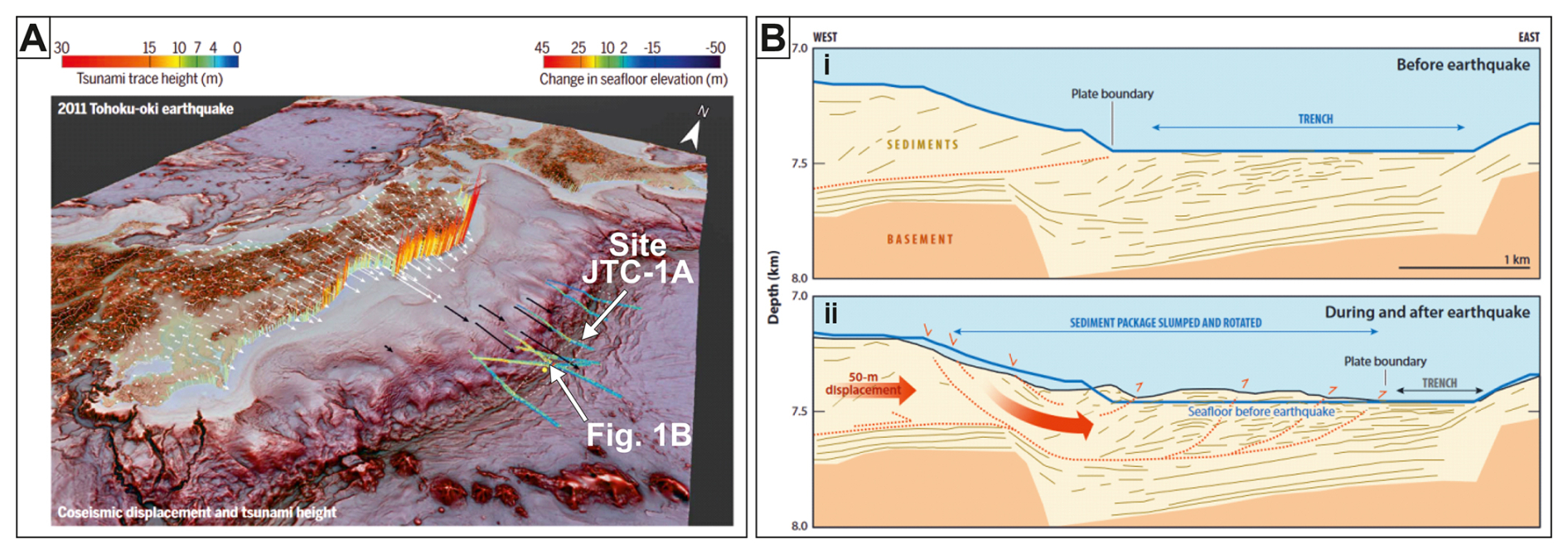
Figure 1Coseismic displacement and tsunami height of the 2011 Tōhoku-oki earthquake (a; figure by Kodaira et al., 2021) and conceptual sketch (b; see arrow in panel a for the location of panel b, illustrating evolution) before (i) and during (ii) the 2011 CE Tōhoku-oki earthquake, resulting in trench-sediment deformation (Kodaira et al., 2012, 2020; Strasser et al., 2013; Ueda et al., 2023). Panel (b) adapted from Strasser et al. (2013). Note that the proposed site of IODP3 Expedition 503, Site JTC-1A, is located north of the area that had significant slip to the trench during the 2011 CE Tōhoku-oki earthquake.
Megathrust earthquakes affect offshore environments, including deep-sea trenches along the subducting plate margins. Oceanic trenches are often > 6000 m below sea level, comprising the hadal zone, and are among the least-explored environments on Earth (Jamieson et al., 2010). Widespread sediment remobilisation induced by shaking during giant earthquakes produces downslope gravitational sediment transport and widely distributes event deposits in terminal trench basins. Several submarine paleoseismic studies along subduction zones (e.g. De Batist et al., 2017; Howarth et al., 2021; Strasser et al., 2024, and references therein) have successfully obtained sedimentary event records that can be positively correlated with modern and historical earthquakes and/or reveal evidence for prehistorical events.
Conventional 10 m long core (Ikehara et al., 2016; McHugh et al., 2020; Schwestermann et al., 2020; Kanamatsu et al., 2022, 2023) and sub-bottom profile studies (Kioka et al., 2019a) along the Japan Trench (JT) demonstrate the strong potential to advance our understanding of earthquake recurrence beyond timescales of the last few thousand years. Results of 40 m long cores taken during International Ocean Discovery Program (IODP) Expedition 386 (Ikehara et al., 2023a; Strasser et al., 2023, 2024) suggest that thick event deposits in the central Japan Trench (cJT) basins are possible records of megathrust earthquakes since ∼ 20 ka (Fig. 2). Therefore, the trench-fill sediments in the cJT are among the best archives of past giant earthquakes and can be used to expand turbidite paleoseismology over a much longer timescale.
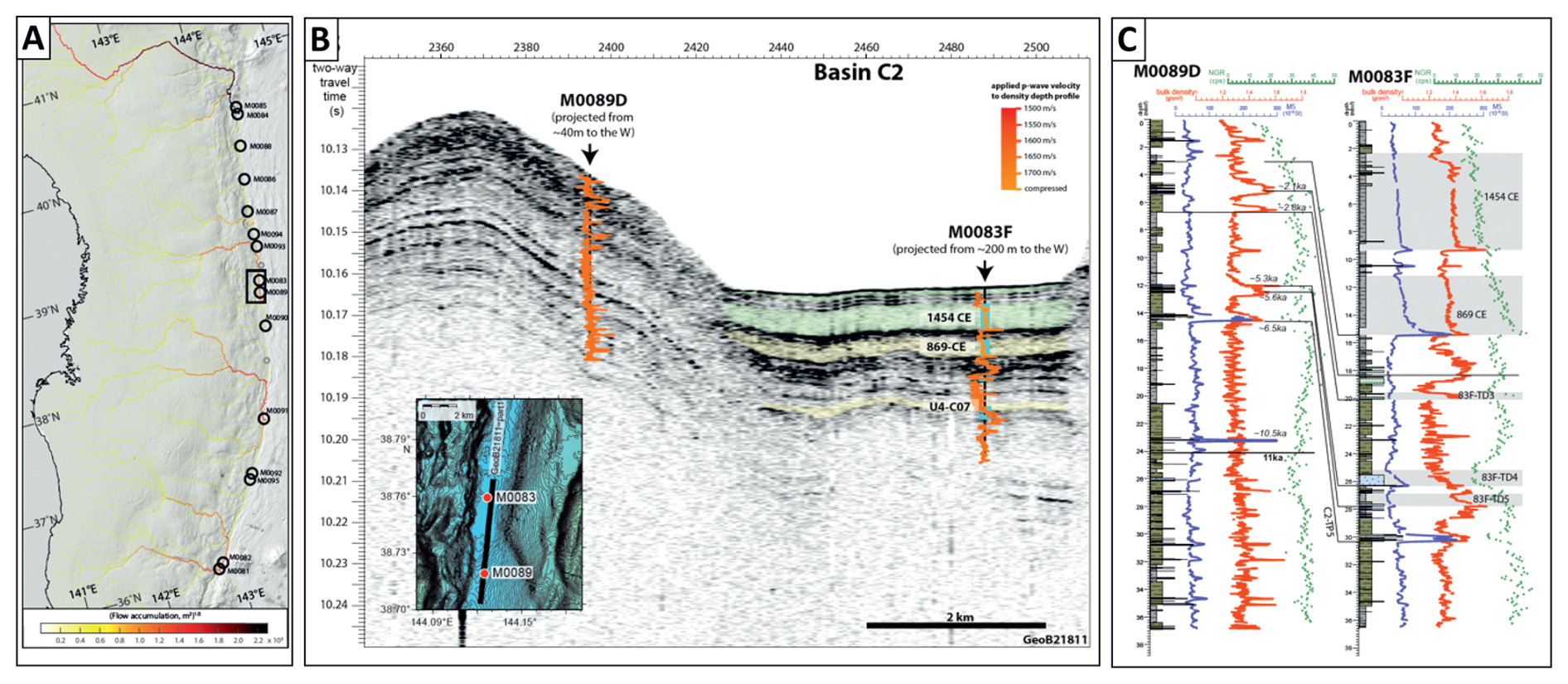
Figure 2Location and shallow subsurface characteristics of the study area: (a) overview of the Japan Trench subduction margin and location of Basin C2 as the main study area of IODP3 Expedition 503. The map shows flow accumulation (illustrated as the square root of flow accumulation; m2) after Kioka et al. (2019a) with IODP Expedition 386 site locations (Strasser et al., 2023). (b) Event deposits at sub-bottom profiler (SBP) scale imaged and sampled in Basin C2 of the central Japan Trench. SBP profile from Kioka et al. (2019a), with density profiles of Holes M0083F and M0089D converted from depth to two-way travel time (TWT). Different colours of the density profiles give approximated P-wave velocities applied for the depth conversion. Figure modified from Strasser et al. (2024). (c) Lithology, magnetic susceptibility (MS), density, and natural gamma-ray (NGR) logs and initial age constraints of Holes M0083F and M0089D, with SBP-scale event deposits (shaded in grey) and tie points correlating event deposits and marker horizons between the sites. Figure modified from Strasser et al. (2024).
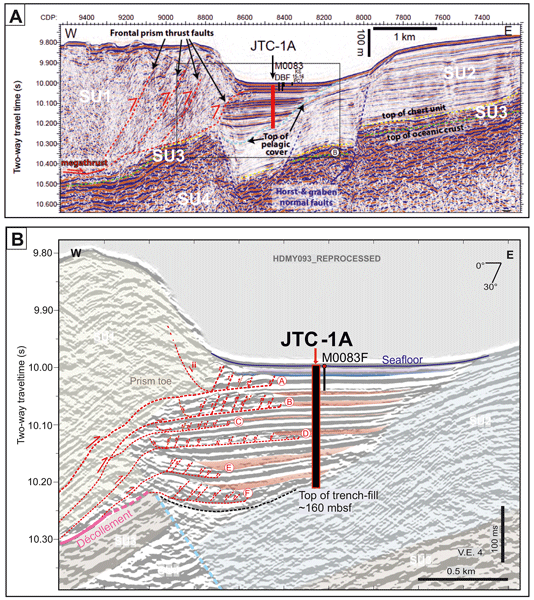
Shallow coseismic slip during the 2011 CE earthquake triggered a kilometre-scale rotational slump on the lowermost trench slope, causing deformation of the trench-fill basin stratigraphy of cJT and contributing to the large tsunami (Fig. 1; Kodaira et al., 2012; Strasser et al., 2013; Ueda et al., 2023; Kodaira et al., 2020, 2021). Such deformation of trench-fill sediments therefore documents geological evidence for extreme tsunamigenic slip propagating all the way to the trench (slip to the trench). Geological evidence for an older slip-to-the-trench-style megathrust earthquake has been uncovered from trench-fill stratigraphy in a cJT basin further north (Site JTC-1A in Fig. 1a). In high-resolution multi-channel seismic (MCS) profiles in the cJT basin, several high-amplitude reflectors are tilted and underlie reflectors representing deformed stratigraphy at the landward basin edge (Fig. 3; Pizer et al., 2025). Tilts become larger with increasing sub-bottom depths in trench-normal profiles, suggesting periodic tilting events in the basins.
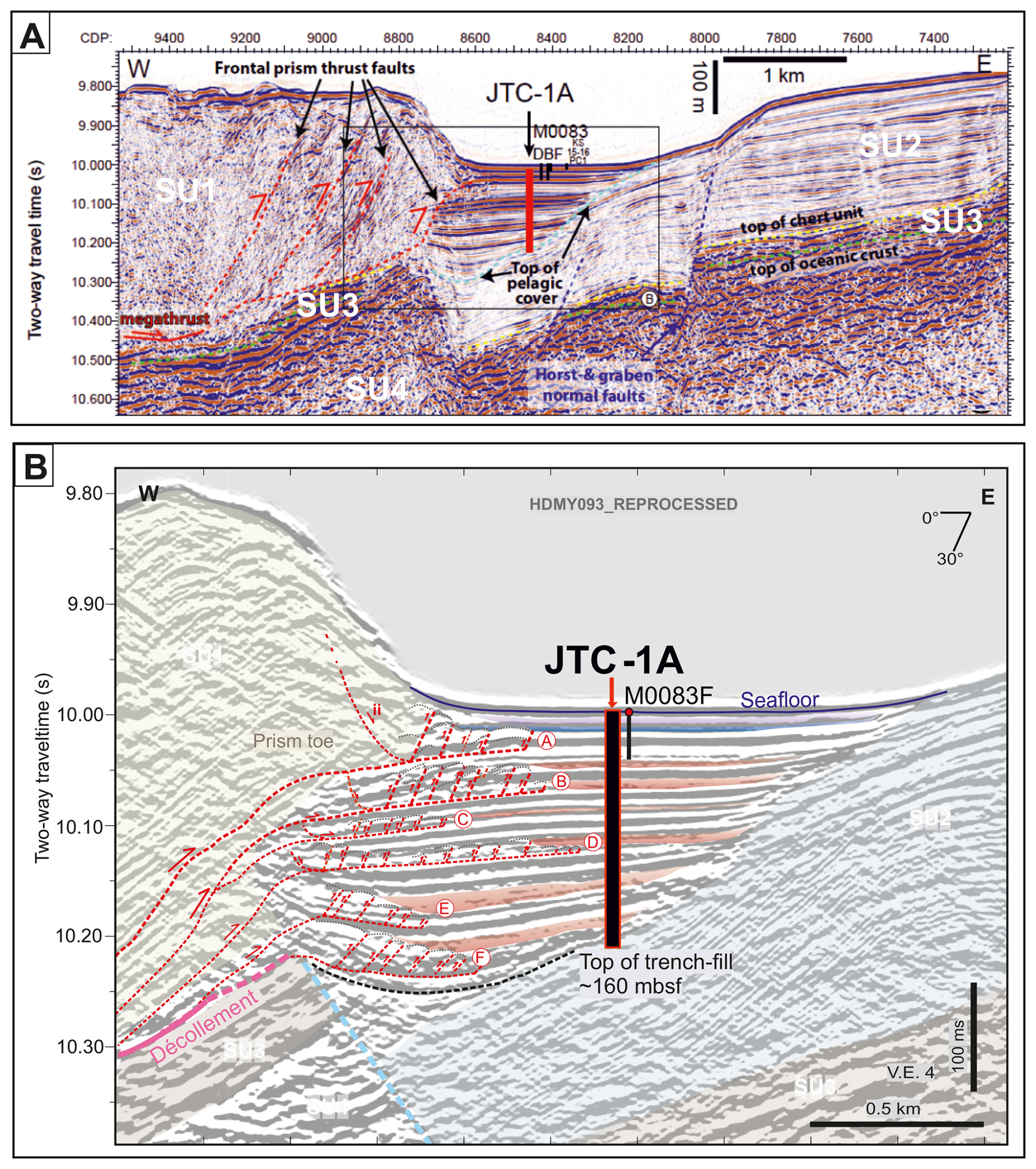
Figure 3Hypothesised evidence for paleo-slip-to-the-trench events in reflection seismic data and location of IODP3 Expedition 503 Site JTC-1A. (a) Trench-normal profile of multi-channel seismic (MCS) Line HDMY093 across the proposed site, Site JTC-1A, with annotated interpretation after Nakamura et al. (2023) and Schottenfels et al. (2024). (b) Detailed seismic interpretation by Pizer et al. (2025) of structural deformation of the landward part of trench-fill stratigraphy related to slip-to-the-trench rupture and correlative event deposits in the trench basin (figure modified from Pizer et al., 2025).
Core–seismic correlation using cores and sub-bottom profiler (SBP) data from IODP Expedition 386 indicates that a high-amplitude reflection at the base of imaged up-thrusted sediments is correlative with the basal sandier layer of the third thick event deposit by the 869 CE Jōgan earthquake, which was a major earthquake and tsunami event prior to the 2011 CE earthquake (Fig. 4; Pizer et al., 2025). Several older intervals of tilted, high-amplitude reflectors, up-thrusted trench-fill stratigraphy, and ponding even beds are imaged in the deeper seismic profiles in the cJT basin (Fig. 3b; Pizer et al., 2025). Therefore, establishing a chronology for deformed horizons in seismic data may improve our understanding of the recurrence of tsunamigenic slip-to-the-trench vs. deep megathrust rupture modes.
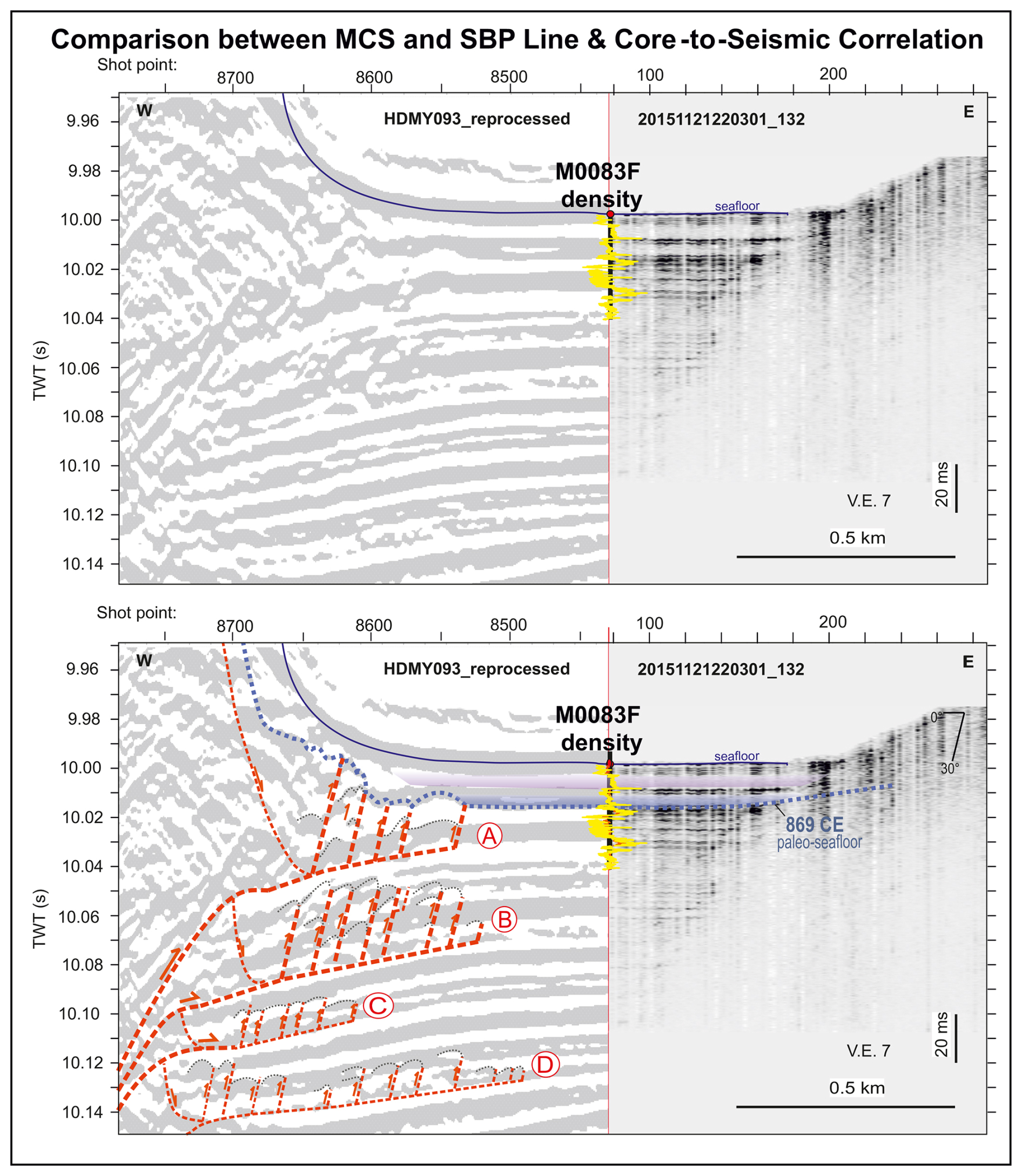
Figure 4Multi-channel seismic (MCS) to sub-bottom profiler (SBP) comparison: uninterpreted (top) and interpreted (bottom) MCS Line HDMY093 (left) and SBP Line 20251121220301 (right) detailing core-to-SBP-to-seismic correlation. Interpretation of coseismic-slip-propagation-induced deformation of trench-fill sediment is by Pizer et al. (2025). Stratigraphic correlation suggests that the youngest slip-to-the-trench event in this basin north of the high slip area of the 2011 CE Tōhoku-oki earthquake is linked to the 869 CE Jōgan earthquake and tsunami. Density profile from Expedition 386 Hole M0083F is superimposed on the SBP line, documenting good correlation of the high-density basal layer of event deposits in cores with basal high-amplitude reflections of 1454 CE (purple), 869 CE (blue), and interpreted prehistorical earthquake event deposits in SBP profiles (see Fig. 1; Strasser et al., 2024). MCS lines do not resolve geometrical details of event deposits but indicate high-amplitude reflection to roughly correlate with major event deposits (figure modified after Pizer et al., 2025). TWT: two-way travel time. V.E.: vertical exaggeration.
The interstitial-water (IW) geochemical data may also be a new methodology in submarine paleoseismology, based on our hypothesis that earthquakes trigger fluid flow events that are recorded by geochemical signals of the cored sedimentary sequences. In Expedition 386 giant piston cores (GPCs), all the IW profiles are non-steady-state (Strasser et al., 2023), showing they have been disturbed recently, most likely as a result of the 2011 CE earthquake. While major ions, Na, Cl, Ca, and Mg, are like seawater, minor elements, particularly B, Li, and Si, are significantly distinct from seawater. Boron isotope data from the length of the trench are comparable (between 30 ‰ and 35 ‰) and unlike seawater (39.6 ‰) (Rasbury et al., 2023). Dynamic compaction from earthquake shaking and the subsequent migration of excess fluids constitute a likely mechanism to discharge fluids from depth. Sampling deeper parts of the basin fill, as well as the underlying graben floor, is needed to better understand how long these signatures are preserved as well as identify the IW source.
By combining stratigraphy and chronology of thick event deposits, IW geochemistry proxy data for past fluid flow pulses in the cores, and core-to-seismic correlation with paleo-slip-to-the-trench events, we will clarify how often the slip-to-the-trench events have occurred in the past.
IODP3 is uniquely positioned to provide such paleoseismologic data by drilling and coring full sedimentary sequences that make up continuous depositional and deformational conditions and records of earthquake occurrences over longer time periods. A combination of the chronologies of thick event deposits and major deformation horizons can provide a new perspective on the history of giant earthquakes. Beyond the current limit of earthquake histories back to a maximum of ∼ 20 ka, the goal of Expedition 503 is to develop submarine paleoseismology over a longer time span to detect longer-term and very rare, but extremely huge, events and to understand the recurrence patterns of large–giant earthquakes in the cJT as an example of a major subducting plate boundary on Earth.
2.1 Japan Trench
The Japan Trench strikes N–S to NNE–SSW, originating at the triple junction of the Pacific, Philippine Sea, and Okhotsk plates at the south and intersecting the Kuril Trench to the north. The Pacific plate is subducting beneath the Okhotsk plate at a rate of 8.0–8.6 cm yr−1 in the NW direction along the Japan Trench (DeMets et al., 2010). Water depth of the axis becomes deeper southward, from ∼ 6800 m in the north to > 7500 m in the centre and south. According to flexural bending of the Pacific plate, typical horst–graben structures with a N–S to NNW–SSE trend are observed on the subducting Pacific plate (e.g. Boston et al., 2014; Nakamura et al., 2023). The trench axis comprises a series of small basins that are 0.5–15 km long and 0.5–5 km wide due to the relief of horst–graben structures and slightly oblique subduction of the Pacific plate. Such relatively rough trench-floor morphology results in isolated basins with less along-strike connectivity (Kioka et al., 2019a).
The forearc consists of a wedge made of Cretaceous and younger accreted sediments (Kodaira et al., 2017; Tsuru et al., 2000) and a seismically chaotic frontal prism, located at the seaward edge of the forearc. The prism is a wedge-shaped sedimentary package with a width of ∼ 15–30 km that spans the margin parallel to the trench axis (Kodaira et al., 2017; Tsuru et al., 2000). The wedge appears to be composed of accreted incoming plate sediments off-scraped from the incoming Pacific plate (Nakamura et al., 2013; Schottenfels et al., 2024) and modified by large slope failures (Nakamura et al., 2020). The average slope angle of the lower slope is ∼ 5° (von Huene and Lallemand, 1990). No major canyon system connects the shelf with the trench floor at the central Japan Trench near the epicentre of the 2011 CE Tōhoku-oki earthquake, although a few canyon systems are observed at the northernmost and southernmost parts of the Japan Trench. Trench basins are the terminal depositional sinks that receive sediments transported by sediment gravity flows through the canyon systems with and without upslope connectivity to shelf or coastal areas (Kioka et al., 2019a).
Several instrumental and historical records indicate that tsunamigenic mega-earthquakes such as the 869 CE Jōgan, 1454 CE Kyōtoku, 1611 CE Keichō off Sanriku, and 2011 CE Tōhoku-oki earthquakes have occurred repeatedly along this subduction margin (Goto et al., 2019; Sawai, 2020, and references therein). Geological records on large tsunamis have been reported from the past 3000–5000 years (e.g. Goto et al., 2019, 2021; Ishizawa et al., 2022). The instrumental, historical, and geological data indicate along-strike and temporal variability in the rupture mode for past earthquakes and that the recurrence interval of M 9-type megathrust ruptures may be as short as 570 years (Philibosian and Meltzner, 2020). From seismic moment–frequency relations, return times for M 9-type earthquakes off Tōhoku were calculated as 260–880 years (Uchida and Matsuzawa, 2011). Based on slip deficit accumulation over time and seismo-mechanical modelling, recurrence of the earthquakes has been estimated as 590–730 years (Uchida and Bürgmann, 2021), 520–800 years (Barbot, 2020), and ∼ 600 years (Nakata et al., 2021). These estimates are consistent with the occurrence of three giant earthquakes in the last 1500 years. A “supercycle” of giant (M 9-type) earthquakes with a recurrence interval of ∼ 600–700 years, which is superimposed on the cycle of great (M 7–8) earthquakes, is proposed for the megathrust earthquake off Tōhoku (Satake, 2015).
2.2 Japan Trench paleoseismology
Deep-sea turbidites are a potential tool for submarine paleoseismology (e.g. Adams, 1990; Goldfinger et al., 2012, 2017; Howarth et al., 2021). Earthquakes are a major mechanism for the initiation of turbidity currents, although several alternative mechanisms such as large storm waves, storm surges, hyperpycnal flows (floods), rapid sediment loading, submarine groundwater discharge, volcanic eruptions, and bolide impacts have been proposed (e.g. Goldfinger et al., 2012; Pickering and Hiscott, 2015). It is well known that earthquake-induced marine slope failures have generated turbidity currents, e.g. the 1929 CE Grand Banks earthquake, NW Atlantic (Heezen and Ewing, 1952); the 1954 CE Chlef (then named Orléansville) earthquake, Algeria (Heezen and Ewing, 1955); and the 2006 CE Pingtung earthquake, Taiwan (Hsu et al., 2008). Recent observations have demonstrated a wide range of earthquake-related sedimentary signatures linked to exceptionally large subduction zone earthquakes and their aftershocks:
-
slumps in the trench linked to coseismic slip propagation of the 2011 CE Mw 9.0 Tōhoku-oki earthquake all the way to the trench (Fujiwara et al., 2011; Strasser et al., 2013; Ueda et al., 2023);
-
turbidity currents released simultaneously in different canyon heads travelling down-canyon to merge below confluences during the 1700 CE Mw 9.0 Cascadia earthquake (Goldfinger et al., 2012, 2017) and the 2016 CE Mw 7.8 Kaikōura earthquake in Aotearoa / New Zealand (Howarth et al., 2021);
-
homogeneous sediment extending for long distances across the abyssal plain of the Mediterranean linked to the 365 CE Crete earthquake (Polonia et al., 2013, 2016);
-
dense plumes of sediment remaining in suspension above the seafloor for weeks to months after the 2004 CE Mw 9.2 Sumatra–Andaman (Seeber et al., 2007), 2004 CE M 7.4 off-Kii Peninsula (Ashi et al., 2014), and 2011 CE Mw 9.0 Tōhoku-oki earthquakes (Noguchi et al., 2012; Oguri et al., 2013);
-
a significant volume of sediment and carbon transport to the deep sea by canyon flushing and remobilisation of young organic-carbon-rich surficial sediments over wide areas, triggered by the 2016 CE Mw 7.8 Kaikōura (Mountjoy et al., 2018) and 2011 CE Mw 9.0 Tōhoku-oki (Bao et al., 2018; Kioka et al., 2019b) earthquakes.
Multimethod characterisation for detailed structural, physical, chemical, and microbiological characterisation has revealed distinct signatures and patterns for event deposit sedimentary sequences that result from (1) the remobilised material and its original provenance (as a proxy for sediment source and/or routing processes), (2) grain size distribution and structural orientation reflecting transport and depositional dynamics, and (3) consolidation and microbial organic matter degradation reflecting postdepositional processes (McHugh et al., 2011; Polonia et al., 2016; Goldfinger et al., 2017; Chu et al., 2023). Positive stratigraphic correlation of such multiproxy signatures between widely separated sites favours a common causative mechanism, especially if the respective sites are isolated from each other (Goldfinger et al., 2012; Talling, 2014; Ikehara et al., 2018; Schwestermann et al., 2020). These studies and more, many of which have investigated event deposits that are positively correlated with historical earthquakes, have proposed characteristic patterns or signals that are potentially distinctive depending on earthquake origin, subsequent tsunamis, and aftershock series (Goldfinger et al., 2012; Oguri et al., 2013; Ikehara et al., 2016, 2018; Polonia et al., 2016, 2017; Kioka et al., 2019a; Schwestermann et al., 2020, 2021; Howarth et al., 2021). The data used in these studies are mostly obtained by conventional gravity or piston coring. Therefore, they often only comprise a few event deposits that can be linked to earthquakes for a given margin.
Conceptual depositional models of event layers are not validated against a longer temporal record. The deposition and preservation of event deposits and their stratigraphic signal vary by location and may change through time (Sumner et al., 2013; Bernhardt et al., 2015; Ikehara et al., 2018). Thus, to test the robustness of the proposed models and relations, both temporally long and spatially extensive records are needed. The coring site location is a key issue in submarine paleoseismology (Goldfinger et al., 2017; Ikehara et al., 2018; Kioka et al., 2019a). To obtain a better record of past earthquakes, detailed characterisation of the depositional history of a site is essential.
The Japan Trench is a suitable area to test for the development of submarine paleoseismology (Strasser et al., 2024). The 2011 CE Tōhoku-oki earthquake is the first event of its kind worldwide for which the entire activity was recorded by offshore geophysical, seismological, and geodetic instruments. Direct observation of sediment resuspension and redeposition was documented across the entire margin by seafloor monitoring systems and/or rapid response research cruises. Submarine cable breaks were reported along the southern and central Japan Trench due to turbidity currents (Shirasaki et al., 2012; Pope et al., 2017). High bottom-water turbidity (Noguchi et al., 2012) and temperature anomalies (Inazu et al., 2023) were also considered to have resulted from slope failures and sediment remobilisation related to water discharge from the subsurface (Kawagucci et al., 2012; Sano et al., 2014; Inazu et al., 2023). The occurrence of tsunami-induced turbidity currents was also attested to by ocean-bottom instrument data (Arai et al., 2014). Submarine landslides were documented by differential bathymetry (Fujiwara et al., 2011; Strasser et al., 2013). However, the most significant volumetric contribution of earthquake-induced sediment remobilisation occurs through surface sediment remobilisation, which resuspends and redeposits the uppermost few centimetres of young, unconsolidated, and organic-carbon-rich seafloor sediments over a wide area (McHugh et al., 2016; Kioka et al., 2019b; Schwestermann et al., 2020; Ikehara et al., 2020, 2021, 2023b).
Much work has been published on event deposits resulting from earthquake-induced sediment remobilisation within basins along the Japan Trench slope and trench axis. Several thick (> 50 cm) event deposits are recognised within sediment cores (Ikehara et al., 2016, 2018; McHugh et al., 2020; Schwestermann et al., 2021; Usami et al., 2021; Kanamatsu et al., 2022, 2023; Strasser et al., 2024) and as acoustically transparent layers with ponding geometries in sub-bottom profiler (SBP) records (Kioka et al., 2019a, b). Thick event deposits, which usually have thick homogeneous (structureless) mud above a basal sandy bed, in the uppermost sequences of the cores from the central Japan Trench can be correlated with historical earthquakes including the 2011 CE Tōhoku-oki, 1454 CE Kyōtoku, and 869 CE Jōgan earthquakes (Ikehara et al., 2016, 2018; Kanamatsu et al., 2022, 2023; Strasser et al., 2024). A thick event deposit below the 869 CE Jōgan bed was dated to 2.3 ka (Kanamatsu et al., 2022, 2023). Correlative thick event deposits are also observed in slope basin cores (Usami et al., 2018). Kioka et al. (2019a) indicated that acoustically transparent layers similar to those correlative with historical earthquake events were observed in deeper positions in the trench-fill sequences of SBP records below the coring depth reached by previous expeditions. Therefore, the trench-fill sediments most likely include the older megathrust earthquake records as thick event deposits.
2.3 Tectonically induced trench-fill deformation
Sub-bottom profiler (SBP) and high-resolution multi-channel seismic (MCS) profiles indicate that trench-fill deposits in small terminal basins along the Japan Trench axis show parallelly stratified acoustic structure (Ikehara et al., 2018; Kioka et al., 2019a; Nakamura et al., 2023; Figs. 3 and 4). Differential bathymetry between pre- and post-earthquake observations of the 2011 CE Tōhoku-oki earthquake documented a submarine landslide in the central Japan Trench basin (Fujiwara et al., 2011; Strasser et al., 2013). A deformed upheaval structure created during coseismic slip on the shallow plate interface and earthquake-triggered slump in the lowermost trench slope due to the 2011 CE Tōhoku-oki earthquake was detected in the trench-fill sequence of the central Japan Trench (Kodaira et al., 2012; Strasser et al., 2013; Ueda et al., 2023; Fig. 1). Such deformation is probably more geological evidence of the extreme slip which propagated to the trench (slip-to-the-trench) and is considered important for causing outstanding large tsunamis (Kodaira et al., 2021) in relation to past giant earthquakes.
Geological evidence for an older slip-to-the-trench-style megathrust earthquake has been uncovered from trench-fill stratigraphy in a cJT basin further north (Site JTC-1A in Fig. 1a). In high-resolution MCS profiles in the cJT basin, several high-amplitude reflectors are tilted and underlie reflectors representing deformed stratigraphy at the landward basin edge (Fig. 3; Pizer et al., 2025). Several tilted reflectors with high amplitude were observed in the MCS profiles in the cJT basins (Fig. 3). Tilts become larger with increasing sub-bottom depths in trench-normal profiles, suggesting periodic tilting events in the basins. Core–seismic correlation using cores and SBP data from IODP Expedition 386 indicates that a high-amplitude reflection at the base of imaged up-thrusted sediments is a correlative basal sandier layer of the third thick event deposit by the 869 CE Jōgan earthquake, which was a major earthquake and tsunami event prior to the 2011 CE Tōhoku-oki earthquake (Fig. 4; Pizer et al., 2025). Several older intervals of tilted, high-amplitude reflectors, up-thrusted trench-fill stratigraphy, and ponding even beds are imaged in the deeper seismic profiles in the cJT basin (Fig. 3b; Pizer et al., 2025). Therefore, establishing a chronology for structural horizons correlative with such trench-floor deformation and tilting events in seismic data may improve our understanding of the recurrence of tsunamigenic slip-to-the-trench vs. deep megathrust rupture modes.
2.4 Earthquake-induced carbon and material cycling and fluid migration
The JT basins act as terminal sinks for sedimentary materials including carbon (Kioka et al., 2019b; Chu et al., 2023). Thus, the trench-fill sediments have the potential to form high-resolution archives to unravel the history of deep-ocean elemental cycles. Investigation of deep-ocean elemental cycles and shedding new light on sediment and carbon fluxes of earthquake-triggered sediment remobilisation to a deep-sea trench and on influence on the hadal environments are important scientific targets of this expedition. The relatively high content of total organic carbon (TOC; > ∼ 1 wt %) in both hemipelagic and event muds coupled with high average sedimentation rate (> 1 m kyr−1; Schwestermann et al., 2021) indicates that huge amounts of organic carbon has been buried in the JT basins. Based on results from Expedition 386 (Ikehara et al., 2023a), high TOC in the event deposits suggests that earthquake-triggered sediment remobilisation has contributed to this large mass accumulation of organic carbon (OC). Intensive remineralisation of sedimentary TOC occurs in the sediments. Inorganic geochemistry is also influenced by such organic matter degradation and remineralisation as it influences the redox conditions, which can cause precipitation of minerals such as baryte, Fe-sulfides, Mn-oxides, and authigenic carbonates that can provide evidence of past sulfate–methane transition zones (Chu et al., 2023). Accumulation and ageing of dissolved OC and dissolved inorganic carbon in the subsurface lead to enhanced production of labile dissolved carbon owing to earthquake-triggered turbidites, which supports intensive microbial methanogenesis in the trench sediments and the stimulation of active silicate weathering and authigenic carbonate formation (Luo et al., 2025). The residual dissolved carbon is hypothesised to accumulate in the deeper subsurface sediments and to possibly continue to fuel the deep biosphere (Fig. 5; Chu et al., 2023). This hypothesis and its implication for stimulating carbon transformation and eventually carbon sequestration in trench sediment and into the subduction zone will be tested by IODP3 Expedition 503 drilling.
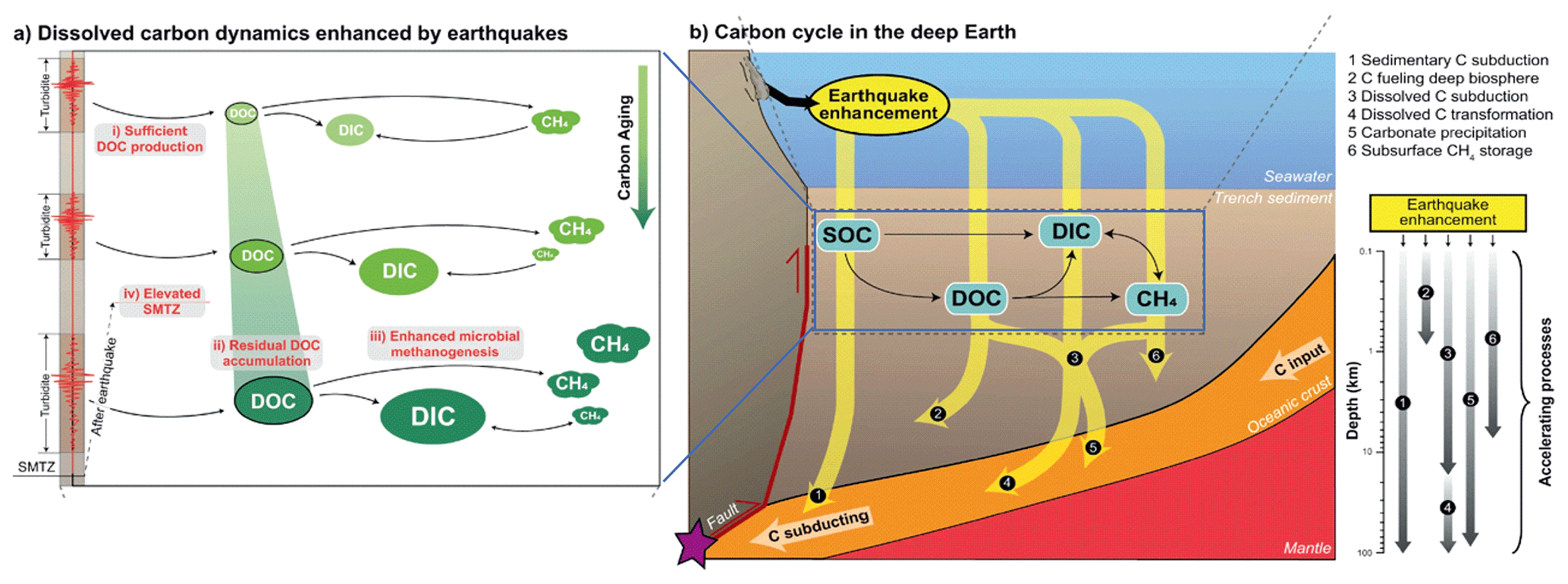
Figure 5(a) Dissolved carbon dynamics in trench sediments are enhanced by earthquakes (adapted from Chu et al., 2023). (i) Sufficient dissolved carbon production facilitated by the combined effects of earthquake-triggered sediment deposition and compaction leads to (ii) larger dissolved organic carbon (DOC) and dissolved inorganic carbon (DIC) pools that age with depth, which result in (iii) enhanced microbial methanogenesis via fermentation and CO2 reduction and (iv) an elevated sulfate–methane transition zone (SMTZ) that enables methanogenesis at shallower depth. (b) The impact of earthquakes on the carbon cycle in the subduction zone. The purple star indicates megathrust earthquakes along the plate boundary, which trigger seismic remobilisation of sedimentary organic carbon (SOC) to the trench. Sufficient dissolved carbon production is facilitated by the combined effects of earthquake-triggered sediment deposition and compaction that lead to larger DOC and DIC pools that age with depth, which result in enhanced microbial methanogenesis via fermentation and CO2 reduction and an elevated SMTZ that enables methanogenesis at shallower depth. The residual dissolved carbon may continue to fuel the deep biosphere and is hypothesised to accumulate in the deeper subsurface sediments to eventually enter the subduction zone, undergoing dehydration and forming carbon reservoirs during processes in the deep Earth.
Results of IODP Expedition 386 (Ikehara et al., 2023a; Strasser et al., 2023) also suggest that minor elements in IW may lead to an improved understanding of pore water evolution. Diagenesis, including clay mineral formation or breakdown; opal transformation; and volcanic ash leaching are important mechanisms that control IW geochemistry (Luo et al., 2025). These processes have been suggested to produce distinct boron isotope (δ11B) signatures, particularly combined with Cl and B concentrations in the accretionary wedge, where sediments experience different degrees of burial (Saffer and Kopf, 2016). Similar IW chemistry is seen in the Japan Trench, suggesting that fluids from outside the graben sediment system itself have been introduced. Boron isotopes are isotopically lighter than seawater throughout the trench, while B has a profile of increasing concentrations that are up to 3 times seawater values (Rasbury et al., 2023). Trends in B, Li, and Si suggest a source where clay minerals are forming to produce an equilibrium Si concentration of 900 µM, a B concentration of at least 1500 µM, and a Li concentration that is less than 10 µM. Altogether, because it would not be possible to achieve the IW chemistry in situ to the degree that they see, their results suggest a deeper origin of IW, possibly related to fluid discharge driven by dynamic compaction related to strong seismic shaking (Fig. 6), although we know little of the detailed origin and processes. Finding the source of this fluid would be a major step forward in our understanding of the hydrology of this system.
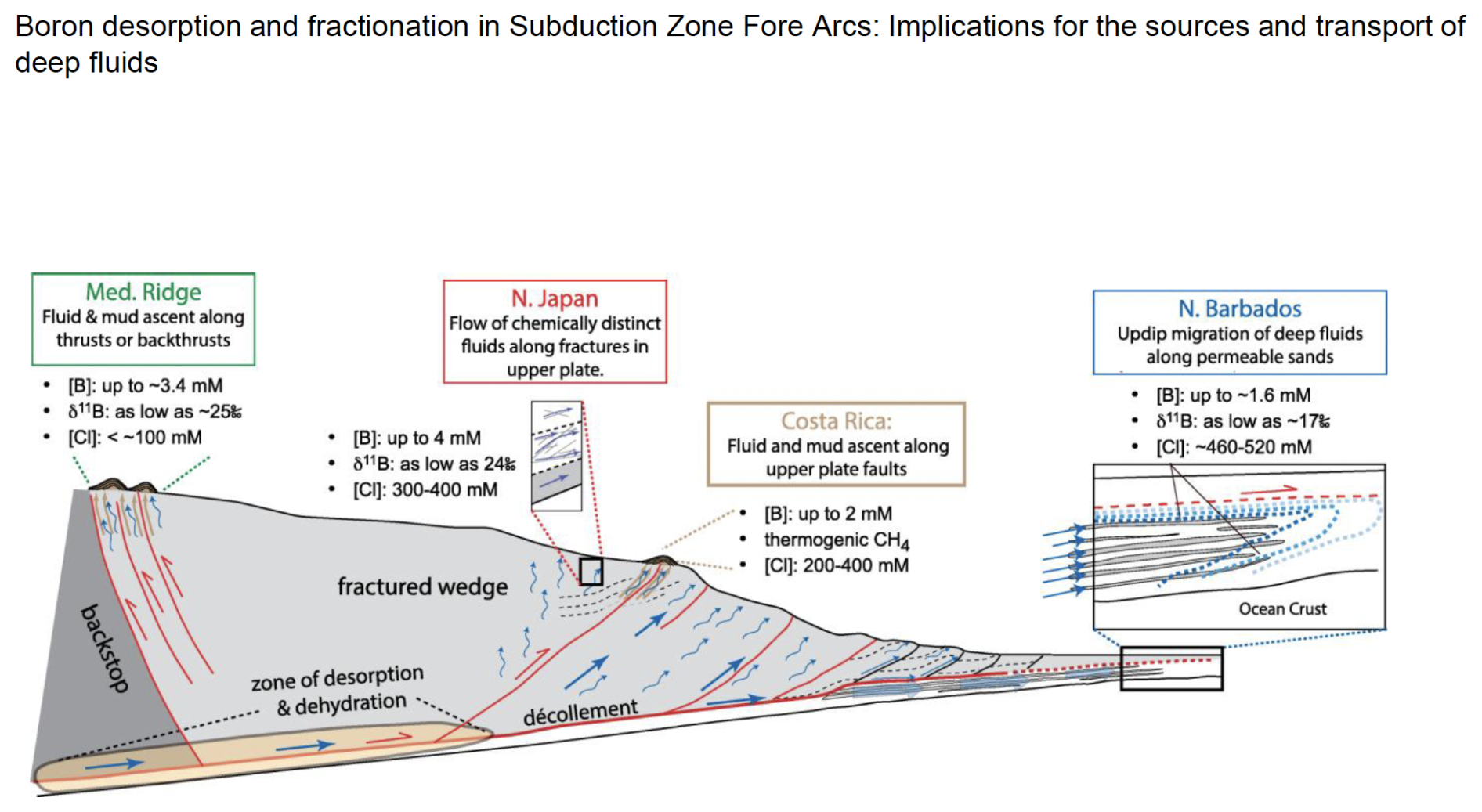
Figure 6Model for boron concentrations and isotope ratios based on high-temperature desorption and dehydration from clays from Saffer and Kopf (2016). Interstitial-water (IW) geochemistry of the Japan Trench has values like those of northern Barbados, with boron concentrations of 0.5–1.2 mM, δ11B as low as 17 ‰, and chlorinity near that of seawater (Rasbury et al., 2023). While existing data are inconclusive as to the source of boron, the hypothesis that slip-to-the-trench earthquakes trigger dynamic compaction, dewatering, and discharge events will become testable thanks to IODP3 Expedition 503 drilling and IW sampling.
There is high potential for using the event stratigraphy of trench-fill sedimentary successions in the Japan Trench to reconstruct a long history of giant megathrust earthquakes for evaluating earthquake recurrence patterns. Furthermore, dating key reflectors in seismic profiles suggesting tsunamigenic slip-to-the-trench earthquakes and testing interstitial-water geochemical proxies are expected to deliver better understanding of how often and when megathrust ruptures have propagated into the shallowest part to reach the trench. To address these overarching goals, the primary scientific objectives are as follows:
- O-1
Identify and explore the temporal distribution of event deposits and tectonically driven deformation and tilting events to investigate time-dependent up-dip rupture variability in the megathrust fault.
- O-2
Develop a long-term earthquake record for tsunamigenic giant earthquakes.
- O-3
Evaluate the influence of earthquake-induced fluid migration (discharge) in trench-fill sediments.
The cores from a proposed primary site will be used for multi-method applications to characterise and date event deposits, stratigraphically correlative trench-fill deformation events, and transient geochemical profiles. Drilling the entire trench fill will also reveal samples and data for characterising rates and states of the remineralisation and transformation of OC and related element cycles and deep subsurface hadal microbial activity, which comprises the fourth emerging objective (O-4) of this expedition.
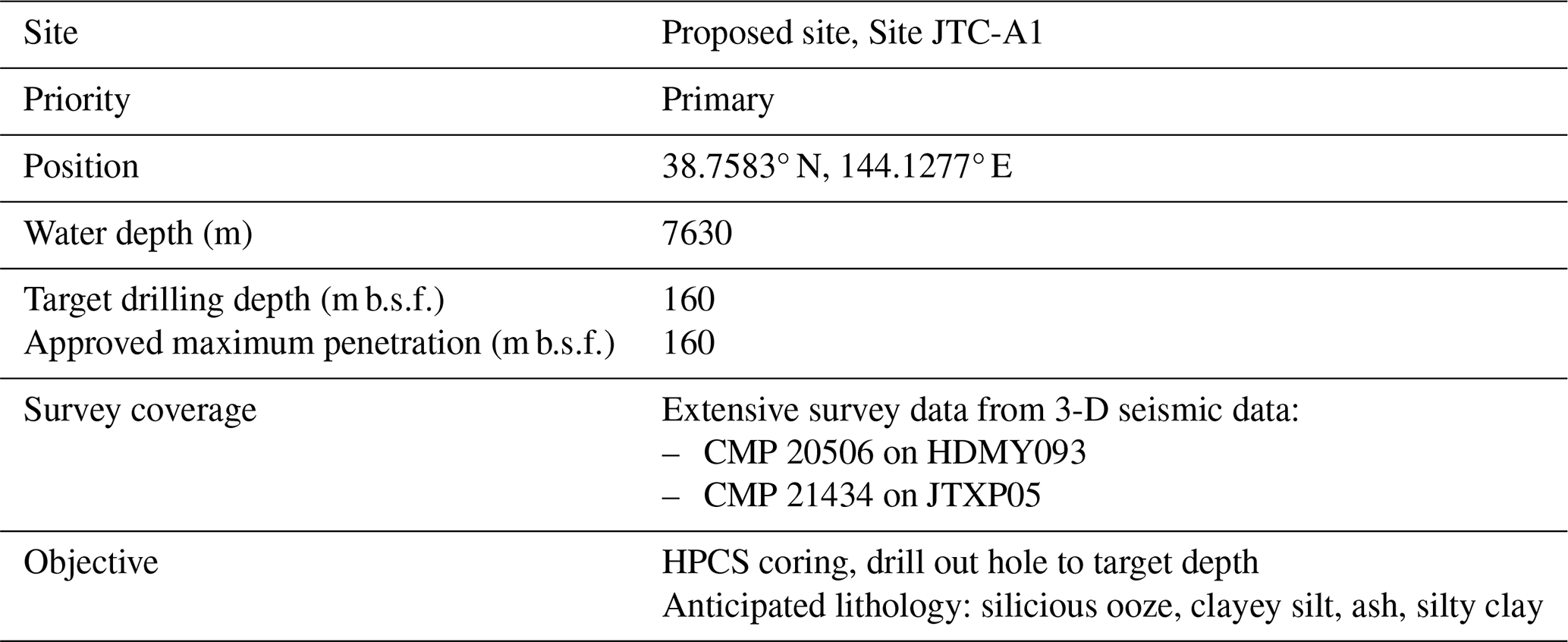
IODP3 Expedition 503 will focus on a trench-fill basin in the cJT (Basin C2 after Strasser et al., 2023) where two GPC sites (Sites M0083 and M0089) of IODP Expedition 386 with good age controls are located (Strasser et al., 2024; Fig. 2). The trench-basin fill there is seismically well stratified and includes some acoustically transparent layers and some reflectors with high amplitudes. In trench-normal MCS profiles, tilts of reflectors increase occasionally at some high-amplitude reflection horizons (Fig. 3). The proposed site, Site JTC-1A, is located near Site M0083 on the Basin C2 seafloor. Thick and well-stratified acoustic patterns with some acoustically transparent layers in SBP data record several intercalations of thick event deposits, the youngest of which are related to historical megathrust earthquakes (Strasser et al., 2024; Fig. 2). The youngest trench-fill sediment deformation at the base of the lowermost landward slope, indicative of past earthquake slip propagation to the trench, correlates with the 869 CE Jōgan earthquake event (Fig. 4; Pizer et al., 2025). The high amplitude of the progressively tilted deeper reflectors and correlative buried trench-fill deformation structures suggests that paleo-earthquake slip propagation to the trench was recorded as event deposits with thick basal sand layers (Fig. 3; Pizer et al., 2025). Therefore, the proposed site, Site JTC-1A, shows high potential for longer-term event stratigraphy. To avoid sediment disturbance by tectonic deformation, the primary site is located slightly offshore of the thickest trench fill but can recover the deepest tilted reflector (Fig. 3).
Site survey data
All site survey data for IODP3 Expedition 503, such as bathymetric data, MCS and SBP profiles, and IODP Expedition 386 core data, are archived at the IODP Site Survey Data Bank (https://ssdb.iodp.org/, last access: 30 May 2025; select 1010 for the proposal number). Figure 7 depicts the site summary figure for the proposed site, Site JTC-1A.
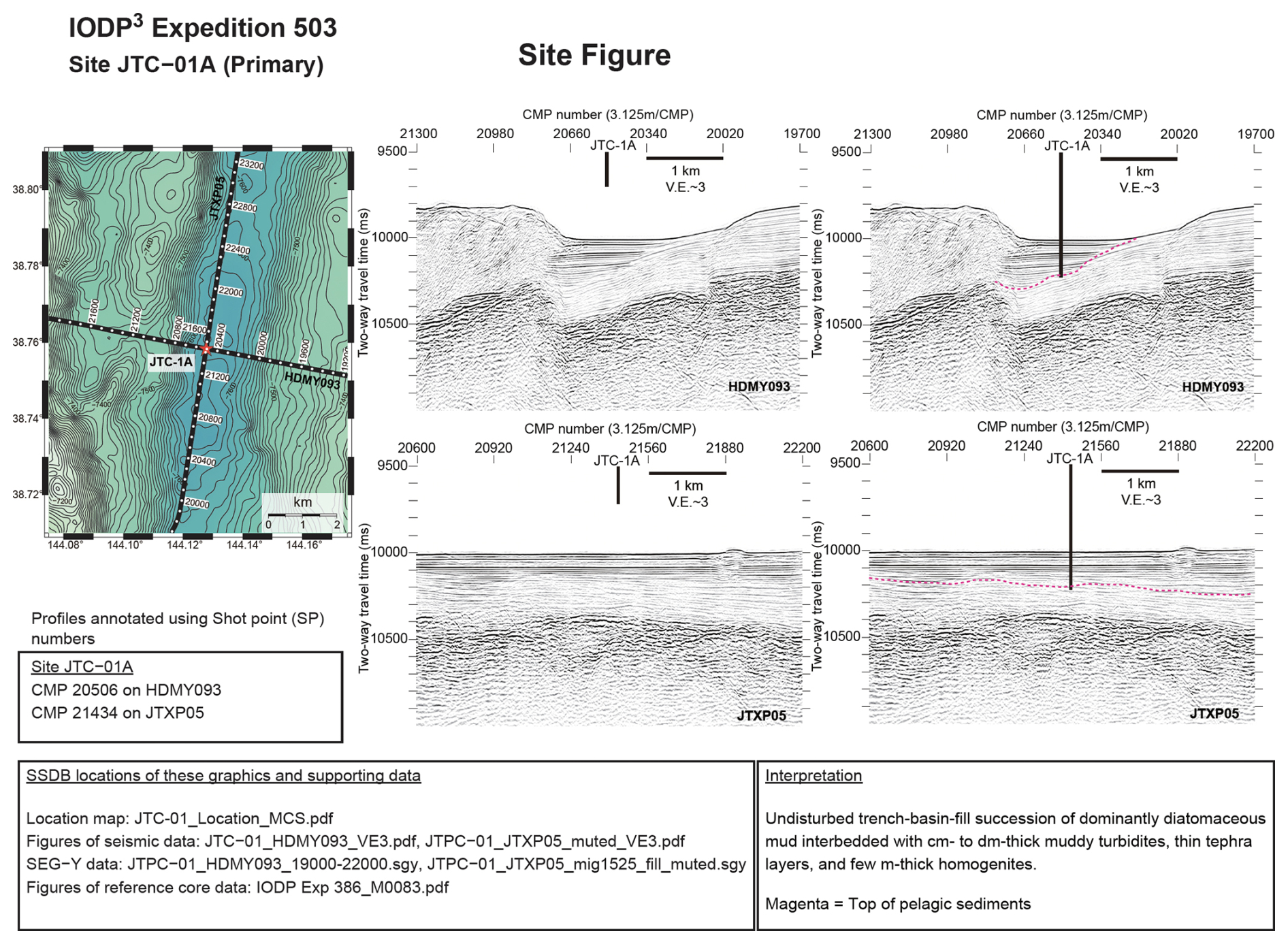
Figure 7Site summary figure of the proposed site, Site JTC-1A. SSDB: Site Survey Data Bank (https://ssdb.iodp.org/, last access: 30 May 2025).
Operations will be run concurrently with IODP3 Expedition 502; after a short port call in Sendai, Japan, the Expedition 502 Science Team will disembark and the Expedition 503 Science Team will embark, before transiting to the first drill hole. IODP3 Expedition 503 will visit the proposed site (JTC-1A) located in a trench-fill basin of the cJT near IODP Expedition 386 Site M0083 at 7630 m water depth (Fig. 8). The general operation plan and time estimates are provided in Table 1, and site summary information is provided in Table 2. The operational sequence to be completed by D/V Chikyu during IODP3 Expedition 503 consists of drilling and coring two adjacent 10.625 in. (26.9875 cm) holes with a hydraulic piston coring system (HPCS) to 160 m below seafloor (m b.s.f.) at the proposed site, Site JTC-1A, to continuously recover the full trench-fill sequence. If HPCS refusal occurs before reaching the target depth of 160 m b.s.f. in the first hole, an extended shoe coring system (ESCS) and/or extended punch coring system (EPCS) will be used to continue coring to the target depth or refusal depth. Due to uncertainty in the thickness of the basin fill, the second-hole target depth will be defined based on the results of the first hole. If the base of the trench-fill sequence is not reached in the first hole, HPCS and ESCS/EPCS coring will be continued as time permits below 160 m to refusal.
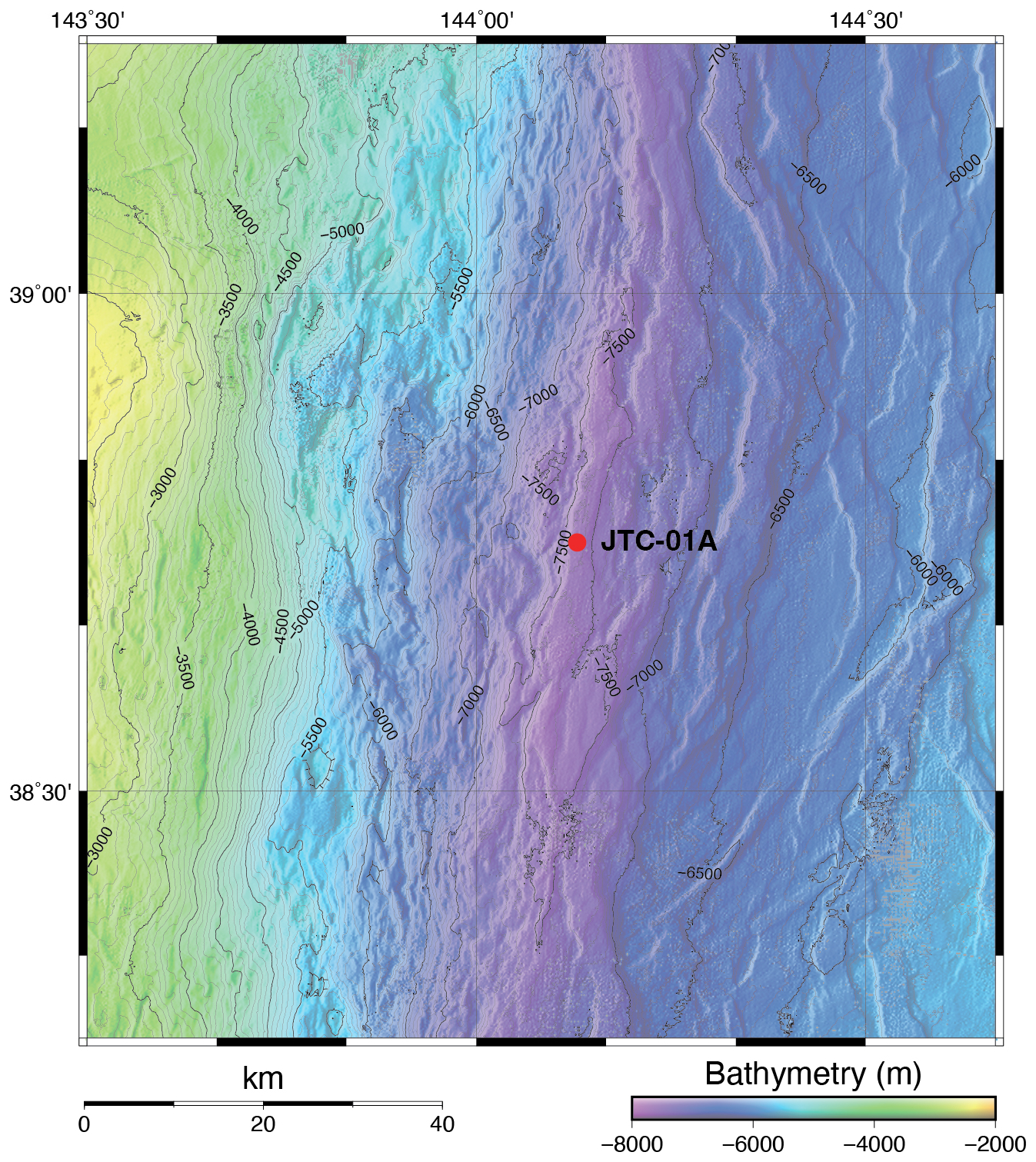
Figure 8Proposed IODP3 drilling site, Site JTC-1A.
Table 1Operation schedule for IODP3 Expedition 503. Note that 10.625 in. is equivalent to 26.9875 cm.
Downhole logging
There will be no downhole logging programme for Expedition 503.
A sampling and measurement plan (SMP) for IODP3 Expedition 503 will be prepared by MarE3 and the Co-Chief Scientists to meet the scientific objectives of the expedition. Scientific activities on D/V Chikyu during the expedition will guarantee standard IODP3 shipboard curation, measurements, and reporting. Details of the facilities that will be available can be found on the Chikyu wiki pages. The sampling and measurement plan will take account of Chikyu specifications for QA/QC. The following briefly summarises the scientific activities:
-
lithology – visual core description and smear slide observation, high-resolution digital imaging, X-ray computed tomography (CT) scans, colour reflectance spectrophotometry, and bulk mineralogy with X-ray diffraction (XRD);
-
micropaleontology – biostratigraphic analyses of siliceous microfossils (e.g. Radiolaria), benthic foraminifers, and redeposited calcareous pelagic micro- and nannofossils;
-
physical properties – multi-sensor core logging for gamma density, P-wave velocity, electrical resistivity, magnetic susceptibility and natural gamma radiation, thermal conductivity measurement, moisture and density (MAD) for discrete samples, undrained shear strength, and unconfined compressive strength;
-
paleomagnetic measurements;
-
geochemistry – taking samples for headspace (HS) shipboard gas analyses of the concentrations and relative abundance of light hydrocarbon gases (C1 to C4), pore fluid chemistry (by Rhizon and squeezed samples), whole-rock geochemistry, X-ray fluorescence (XRF) spectroscopy, and carbon–hydrogen–nitrogen–sulfur (CHNS) elemental analysis;
-
taking and proper storage (+4 and −80 °C) of samples for microbiological post-expedition research and for ephemeral properties.
In principle, report preparation will take place on board as required; the reports to be compiled include
-
daily and weekly operational reports compiled by MarE3 and provided to the management and panels of IODP3 and any other relevant parties,
-
an expedition summary compiled by the Science Team (submission to IODP3 publication services at the end of expedition),
-
the site reports compiled by the Science Team (submission to IODP3 publication services as soon as practically possible after the expedition).
All researchers requesting samples should refer to the IODP3 Sample, Data and Obligations Policy (https://iodp3.org/documents/sample-data-obligations-policy/, last access: 16 May 2025). This document outlines the policy for distributing IODP3 samples and data to research scientists, curators, and educators. The document also defines the obligations that sample and data recipients incur. The sample allocation committee (SAC; composed of Co-Chief Scientists, the Expedition Project Manager, and the IODP3 Curator) will work with the entire Science Team to formulate an expedition-specific sampling plan for “shipboard” (expedition) and post-cruise (personal post-expedition research) sampling.
Members of the Science Team are expected to carry out scientific research for the expedition and publish it. Before the expedition, all members of the Science Team are required to submit research plans and associated sample/data requests via the IODP3 Sample, Data, And Research Request Manager (SDRM; https://web.iodp.tamu.edu/SDRM/#/, last access: 26 May 2025) system ∼ 6 months before the beginning of the expedition (a deadline will be announced by IODP3). Based on sample/data requests submitted ahead of this deadline, the SAC will prepare a tentative sampling plan, which can be revised on the ship and once cores are split as dictated by recovery and cruise objectives. All post-cruise research projects should provide scientific justification for the desired sample size, numbers, and frequency. The sampling plan will be subject to modification depending upon the material recovered and collaborations that may evolve between scientists during the expedition. This planning process is necessary to coordinate the research to be conducted and to ensure that the scientific objectives are achieved. Modifications to the sampling plan and access to samples and data during the expedition and the 1-year post-expedition moratorium period require the approval of the SAC.
The permanent archive halves are officially designated by the IODP3 Curator. Should there be a copy of an interval from parallel holes, they may be classified as temporary archives. All sample frequencies and volumes must be justified on a scientific basis and will depend on core recovery, the full spectrum of other requests, and the expedition objectives. Some redundancy of measurement is unavoidable, but minimising the duplication of measurements among the shipboard team and identified shore-based collaborators will be a factor in evaluating sample requests.
If critical intervals are recovered, there may be considerable demand for samples from a limited amount of cored material. A sampling plan coordinated by the SAC will be required before critical intervals are sampled. The SAC strongly encourages, and may require, collaboration and/or sharing among the shipboard and shore-based scientists so that the best use is made of the recovered core. Coordination of post-cruise analytical programmes is anticipated to ensure that the full range of geochemical-, isotopic-, and physical-property studies are undertaken on a representative sample suite.
7.1 Core and data management
The data management plan follows the standard Chikyu and IODP3 measurement policies:
-
Core sections, along with all personal samples, subsamples, data, images, and standard shipboard measurements, will be registered in J-CORES, the Chikyu lab management system.
-
Core sections (archive and working halves) will be stored at the Kochi University–JAMSTEC Kochi Core Center (Japan).
-
Shipboard data will be available via JAMSTEC Scientific Ocean Drilling Data (J-SODD).
7.2 Outreach
JAMSTEC–MarE3, programme member offices, and IODP3 will collaborate on outreach activities before, during, and after the expedition.
7.3 Staffing
Scientific staffing is determined on the basis of task requirements and nominations from the IODP3 programme member offices. Staffing is based on the need to carry out the drilling and scientific operations safely and efficiently. A list of participants for Expedition 503 will be added to the JAMSTEC Chikyu Expedition 503 website when available.
Data are available at https://web.iodp.tamu.edu/SDRM/# (International Ocean Discovery Program, 2025a), https://ssdb.iodp/org/ (International Ocean Drilling Programme, 2025b), https://iodp3.org/documents/sample-data-obligations-policy/ (International Ocean Drilling Programme, 2024), and https://www.jamstec.go.jp/e/about/equipment/ships/chikyu.html (Japan Agency for Marine-Earth Science and Technology, 2025).
KI and MS proposed the drilling topics. KI, MS, and LM wrote the original draft. All authors read and approved of the final paper.
The contact author has declared that none of the authors has any competing interests.
Publisher’s note: Copernicus Publications remains neutral with regard to jurisdictional claims made in the text, published maps, institutional affiliations, or any other geographical representation in this paper. While Copernicus Publications makes every effort to include appropriate place names, the final responsibility lies with the authors.
This paper was edited by Myriam Kars and reviewed by two anonymous referees.
Adams, J.: Paleoseismicity of the Cascadia subduction zone: Evidence from turbidites off the Oregon-Washington margin, Tectonics, 9, 569–583, https://doi.org/10.1029/TC009i004p00569, 1990.
Arai, K., Inoue, T., Ikehara, K., and Sasaki, T.: Episodic subsidence and active deformation of the forearc slope along the Japan Trench near the epicenter of the 2011 Tohoku Earthquake, Earth Planet. Sc. Lett., 408, 9–15, https://doi.org/10.1016/j.epsl.2014.09.048, 2014.
Ashi, J., Sawada, R., Omura, A., and Ikehara, K.: Accumulation of an earthquake-induced extremely turbid layer in a terminal basin of the Nankai accretional prism, Earth Planets Space, 66, 51, https://doi.org/10.1186/1880-5981-66-51, 2014.
Bao, R., Strasser, M., McNichol, A. P., Haghipour, N., McIntyre, C., Wefer, G., and Eglinton, T. I.: Tectonically-triggered sediment and carbon export to the hadal zone, Nat. Commun., 9, 121, https://doi.org/10.1038/s41467-017-02504-1, 2018.
Barbot, S.: Frictional and structural controls of seismic super-cycles at the Japan trench, Earth Planet Space, 72, 63, https://doi.org/10.1186/s40623-020-01185-3, 2020.
Bernhardt, A., Melnick, D., Hebbeln, D., Lückge, A., and Strecker, M. R.: Turbidite paleoseismology along the active continental margin of Chile – Feasible or not?, Quaternary Sci. Rev., 12, 71–92, https://doi.org/10.1016/j.quascirev.2015.04.001, 2015.
Boston, B., Moore, G. F., Nakamura, Y., and Kodaira, S.: Outer-rise normal fault development and influence on near-trench décollement propagation along the Japan Trench, off Tohoku, Earth Planets Space, 66, 135, https://doi.org/10.1186/1880-5981-66-135, 2014.
Chu, M., Bao, R., Strasser, M., Ikehara, K., Everest, J., Maeda, L., Hochmuth, K., Xu, L., McNichol, A., Bellanova, P., Rasbury, T., Kölling, M., Riedinger, N., Johnson, J., Luo, M., März, C., Straub, S., Jitsuno, K., Brunet, M., Cai, Z., Cattaneo, A., Hsiung, K., Ishizawa, T., Itaki, T., Kanamatsu, T., Keep, M., Kioka, A., McHugh, C., Nicallef, A., Pandey, D., Proust, J. N., Satoguchi, Y., Sawyer, D., Seibert, C., Silver, M., Virtassalo, J., Wang, Y., Wu, T.-W., and Zellers, S.: Earthquake-enhanced dissolved carbon cycles in ultra-deep ocean sediments, Nat. Commun., 14, 5427, https://doi.org/10.1038/s41467-023-41116-w, 2023.
De Batist, M., Talling, P., Strasser, M., and Girarclos, S.: Subaquatic paleoseismology: records of large Holocene earthquakes in marine and lacustrine sediments, Mar. Geol., 384, 1–3, https://doi.org/10.1016/j.margeo.2017.04.010, 2017.
DeMets, C., Gordon, R. G., and Argus, D. F.: Geologically current plate motions, Geophys. J. Int., 181, 1–80, https://doi.org/10.1111/j.1365-246X.2009.04491.x, 2010.
Fujiwara, T., Kodaira, S., No, T., Kaiho, Y., Takahashi, N., and Kaneda, Y.: The 2011 Tohoku-Oki earthquake: Displacement reaching the trench axis, Science, 334, 1240, https://doi.org/10.1126/science.1211554, 2011.
Goldfinger, C., Hans Nelson, C., Morey, A. E., Johnson, J. E., Patton, J. R., Karabanov, E., Gutierrez-Pator, J., Eriksson, A. T., Gracia, E., Dunhill, G., Enkin, R. J., Dallimore, A., and Vallier, T.: Turbidite event history – Methods and implications for Holocene paleosismicity of the Cascadia subduction zone, USGS Prof. Pap., 1661-F, 184 pp., https://doi.org/10.3133/pp1661f, 2012.
Goldfinger, C., Galer, S., Beeson, J., Hamilton, T., Black, B., Romsos, C., Patton, J., Hans Nelson, C., Haumann, R., and Morey, A.: The importance of site selection, sediment supply, and hydrodynamics: a case study of submarine paleoseismology on the northern Cascadia margin, Washington USA, Mar. Geol., 384, 4–46, https://doi.org/10.1016/j.margeo.2016.06.008, 2017.
Goto, K., Ishizawa, T., Ebina, Y., Imamura, F., Sato, S., and Udo, K.: Ten years after the 2011 Tohoku-oki earthquake and tsunami: Geological and environmental effects and implications for disaster policy changes, Earth Sci. Rev., 212, 103417, https://doi.org/10.1016/j.earscirev.2020.103417, 2021.
Goto, T., Satake, K., Sugai, T., Ishibe, T., Harada, T., and Gusman A. R.: Tsunami history over the past 2000 years on the Sanriku coast, Japan, determined using gravel deposits to estimate tsunami inundation behavior, Sediment. Geol., 382, 85–102, https://doi.org/10.1016/j.sedgeo.2019.01.001, 2019.
Heezen, B. C. and Ewing, M.: Turbidity currents and submarine slumps, and the 1929 Grand Banks earthquake, Am. J. Sci., 250, 849–873, 1952.
Heezen, B. C. and Ewing, M.: Orléansville earthquake and turbidity currents, AAPG Bul., 39, 2505–2514, https://doi.org/10.1306/5CEAE2E6-16BB-11D7-8645000102C1865D, 1955.
Howarth, J. D., Orpin, A. R., Kaneko, Y., Strachan, L. J., Nodder, S. D., Mountjoy, J. J., Barnes, P. M., Bostock, H. C., Holden, C., Jones, K., and Cağatay, M. N.: Calibrating the marine turbidite paleoseismometer using the 2016 Kaikōura earthquake, Nat. Geosci., 14, 161–167, https://doi.org/10.1038/s41561-021-00692-6, 2021.
Hsu, S. K., Kuo, J., Lo, C. L., Tsai, C. H., Doo, W. B., Ku, C. Y., and Sibuet, J. C.: Turbidity currents, submarine landslides and the 2006 Pingtung earthquake off SW Taiwan, Terr. Atmos. Ocean. Sci., 19, 767–772, https://doi.org/10.3319/TAO.2008.19.6.767(PT), 2008.
Ide, S., Baltay, A., and Beroza, G. C.: Shallow dynamic overshoot and energetic deep rupture in the 2011 Mw 9.0 Tohoku-Oki earthquake, Science, 332, 1426–1429, https://doi.org/10.1126/science.1207020, 2011.
Ikehara, K., Kanamatsu, T., Nagahashi, Y., Strasser, M., Fink, H., Usami, K., Irino, T., and Wefer, G.: Documenting large earthquakes similar to the 2011 Tohoku-oki earthquake from sediments deposited in the Japan Trench over the past 1500 years, Earth Planet. Sc. Lett., 445, 48–56, https://doi.org/10.1016/j.epsl.2016.04.009, 2016.
Ikehara, K., Usami, K., Kanamatsu, T., Arai, K., Yamaguchi, A., and Fukuchi, R.: Spatial variability in sediment lithology and sedimentary processes along the Japan Trench: Use of deep-sea turbidite records to reconstruct past large earthquakes, in: Tsunamis: Geology, Hazards and Risks, edited by: Scourse, E. M. Chapman, N. A., Tappin, D. R., and Wallis, S. R., Geological Society of London Spec. Pub. No. 456, 75–89, https://doi.org/10.1144/SP456.9, 2018.
Ikehara, K., Usami, K., and Kanamatsu, T.: Repeated occurrence of surface-sediment remobilization along the landward slope of the Japan Trench by great earthquakes, Earth Planets Space, 72, 114, https://doi.org/10.1186/s40623-020-01241-y, 2020.
Ikehara, K., Usami, K., Irino, T., Omura, A., Jenkins, R. G., and Ashi, J.: Characteristics and distribution of the event deposits induced by the 2011 Tohoku-oki earthquake and tsunami offshore of Sanriku and Sendai, Japan, Sediment. Geol., 411, 105791, https://doi.org/10.1016/j.sedgeo.2020.105791, 2021.
Ikehara, K., Strasser, M., Everest, J., Maeda, L., Hochmuth, K., and the Expedition 386 Scientists: Expedition 386 Preliminary Reports: Japan Trench Paleoseismology, International Ocean Discovery Program, College Station, USA, https://doi.org/10.14379/iodp.pr.386.2023, 2023a.
Ikehara, K., Usami, K., and Kanamatsu, T.: How large peak ground acceleration by large earthquakes could generate turbidity currents along the slope of northern Japan Trench, Japan, Prog. Earth Planet. Sci., 10, 8, https://doi.org/10.1186/s40645-023-00540-8, 2023b.
Ikehara, K., Strasser, M., Nakamura, Y., Kanamatsu, T., Rasbury, T., Itaki, T., Nagahashi, Y., Johnson, J., Huang, J.-J., Bao, R., Ishizawa, T., and Moernaut, J.: TRCKing past earthquakes in the sediment record in a Japan Trench basin: Applying submarine paleoseismology in the Deep-time trench-fill sediments (JTRACK Deep-Time Paleoseismology), IODP drilling proposal 1010-APL2, https://www.iodp.org/docs/proposals/1244-1010-apl2-ikehara-cover/file (last access: 30 May 2025), 2024.
Ishizawa, T., Goto, K., Nishimura, Y., Miyairi, Y., Sawada, C., and Yokoyama, Y.: Paleotsunami history along the northern Japan trench based on sequential dating of the continuous geological record potentially inundated only by large tsunamis, Quaternary Sci. Rev., 279, 107381, https://doi.org/10.1016/j.quascirev.2022.107381, 2022.
Inazu, D., Ito, Y., Hino, R., and Tanikawa, W.: Abrupt water temperature increases near seafloor during the 2011 Tohoku earthquake, Prog. Earth Planet. Sci., 10, 24, https://doi.org/10.1186/s40645-023-00556-0, 2023.
International Ocean Discovery Program: IODP Sample, Data, and Research Request Manager, https://web.iodp.tamu.edu/SDRM/#, last access: 26 May 2025a.
International Ocean Discovery Program: IODP Site Survey Data Bank, https://ssdb.iodp/org/, last access: 30 May 2025b.
International Ocean Drilling Programme: Scientific Ocean Drilling Programs Sample, Data, and Obligations Policy, https://iodp3.org/documents/sample-data-obligations-policy/ (last access: 15 May 2025), 2024.
Jamieson, A. J., Fujii, T., Mayor, D. J., Solan, M., and Priede, I. G.: Hadal trenches: the ecology of the deepest places on Earth, Trends Ecol. Evol., 25, 190–197, https://doi.org/10.1016/j.tree.2009.09.009, 2010.
Japan Agency for Marine-Earth Science and Technology: Deep-sea scientific drilling vessel Chikyu, https://www.jamstec.go.jp/e/about/equipment/ships/chikyu.html, last access: 30 May 2025.
Kanamatsu, T., Ikehara, K., and Hsiung, K.-H.: Stratigraphy of deep-sea marine sediment using paleomagnetic secular variation: Refined dating of turbidite relating to giant earthquake in Japan Trench, Mar. Geol., 443, 106669, https://doi.org/10.1016/j.margeo.2021.106669, 2022.
Kanamatsu, T., Ikehara, K., and Hsiung, K.-H.: Submarine paleoseismology in the Japan Trench of northeastern Japan: turbidite stratigraphy and sedimentology using paleomagnetic and rock-magnetic analyses, Prog. Earth Planet. Sci., 10, 16, https://doi.org/10.1186/s40645-023-00545-3, 2023.
Kawagucci, S., Yoshida, Y., Noguchi, T., Honda, M. C., Uchida, H., Ishibashi, H., Nakagawa, F., Tsunogai, U., Okamura, K., Takaki, Y., Nunoura, T., Miyazaki, J., Hirai, M., Lin, W., Kitazato, H., and Takai, K.: Disturbance of deep-sea environments induced by the M9.0 Tohoku Earthquake, Sci. Rep., 2, 1–7, https://doi.org/10.1038/srep00270, 2012.
Kioka, A., Schwestermann, T., Moernaut, J., Ikehara, K., Kanamatsu, T., Eglinton, T., and Strasser, M.: Event stratigraphy in a hadal oceanic trench: The Japan Trench as sedimentary archive recording recurrent giant subduction zone earthquakes and their role in organic carbon export to the deep sea, Front. Earth Sci., 7, 319, https://doi.org/10.3389/feart.2019.00319, 2019a.
Kioka, A., Schwestermann, T., Moernaut, J., Ikehara, K., Kanamatsu, T., McHugh, C., dos Santos Ferreira, C., Wiemer, G., Haghipour, N., Kopf, A., Eglinton, T., and Strasser, M.: Megathrust earthquake drives drastic organic carbon supply to the hadal trench, Sci. Rep., 9, 1553, https://doi.org/10.1038/s41598-019-38834-x, 2019b.
Kodaira, S., No, T., Nakamura, Y., Fujiwara, T., Kaiho, Y., Miura, S., Takahashi, N., Kaneda, Y., and Taira, A.: Coseismic fault rupture at the trench axis during the 2011 Tohoku-oki earthquake, Nat. Geosci., 5, 646–650, https://doi.org/10.1038/ngeo1547, 2012.
Kodaira, S., Nakamura, Y., Yamamoto, Y., Obana, K., Fujie, G., No, T., Kaiho, Y., Sato, T., and Miura, S.: Depth-varying structural characters in the rupture zone of the 2011 Tohoku-oki earthquake, Geosphere, 13, 1408–1424, https://doi.org/10.1130/GES01489.1, 2017.
Kodaira, S., Fujiwara, T., Fujie, G., Nakamura, Y., and Kanamatsu, T.: Large coseismic slip to the trench during the 2011 Tohoku-Oki Earthquake, Annu. Rev. Earth Pl. Sc., 48, 321–343, https://doi.org/10.1146/annurev-earth-071719-055216, 2020.
Kodaira, S., Iinuma, T., and Imai, K.: Investigating a tsunamigenic megathrust earthquake in the Japan Trench, Science, 371, eabe1169, https://doi.org/10.1126/science.abe1169, 2021.
Luo, M., Zheng, M., Wallmann, K., Dale, A.W., Strasser, M., Torres, M.E., Koelling, M., Riedinger, N., Marz, C., Rasbery, T., Bao, R., Itaki, T., Ikehara, K., Johnson, J.E., Bellanova, P., Nakamura, Y., Yu, M., Xie, J. and Chen, D.: Rapid burial and intense degradation of organic matter drives active silicate weathering in the subsurface sediments of the ocean's deepest realm, Geology, 53, 636–641, https://doi.org/10.1130/G53131.1, 2025.
McHugh, C. M., Seeber, L., Braudy, N., Cormier, M.-H., Davis, M. B., Diebold, J. B, Dieudonne, N., Douilly, R., Gulick, S. P. S., Hornbach, M. J., Johson III, H. E., Ryan Mishkin, K., Sorlien, C. C., Steckler, M. S., Symithe, S. J., and Templeton, J.: Offshore sedimentary effects of the 12 January 2010 Haiti earthquake, Geology, 39, 723–726, https://doi.org/10.1130/G31815.1, 2011.
McHugh, C. M., Kanamatsu, T., Seeber, L., Bopp, R., Cormier, M.-H., and Usami, K.: Remobilization of surficial slope sediment triggered by the A.D. 2011 Mw9 Tohoku-Oki earthquake and tsunami along the Japan Trench, Geology, 44, 391–394, https://doi.org/10.1130/G37650.1, 2016.
McHugh, C. M., Seeber, L., Rasbury, T., Strasser, M., Kioka, A., Kanamatsu, T., Ikehara, K., and Usami, K.: Isotopic and sedimentary signature of megathrust ruptures along the Japan subduction margin, Mar. Geol., 428, 106283, https://doi.org/10.1016/j.margeo.2020.106283, 2020.
Mountjoy, J., Howarth, J. D., Orpin, A. R., Barnes, P. M., Bowden, D. A., Rowden, A. A., Schimel, A. C. G., Holden, C., Horgan, H. J., Nodder, S. D., Patton, J. R., Lamarche, G., Gerstenberger, M., Micallef, A., Pallentin, A., and Kane, T.: Earthquakes drive large-scale submarine canyon development and sediment supply to deep-ocean basins, Sci. Adv., 4, eaar3748, https://doi.org/10.1126/sciadv.aar3748, 2018.
Nakamura, Y., Kodaira, S., Miura, S., Regalla, C., and Takahashi, N.: High-resolution seismic imaging in the Japan Trench axis area off Miyagi, northeastern Japan, Geophys. Res. Lett., 40, 1713–1718, https://doi.org/10.1002/grl.50364, 2013.
Nakamura, Y., Fujiwara, T., Kodaira, S., Miura, S., and Obana, K.: Correlation of frontal prism structures and slope failures near the trench axis with shallow megathrust slip at the Japan Trench, Sci. Rep., 10, 11607, https://doi.org/10.1038/s41598-020-68449-6, 2020.
Nakamura, Y., Kodaira, S., Fujie, G., Yamashita, M., Obana, K., and Miura, S.: Incoming plate structure at the Japan Trench subduction zone revealed in densely spaced reflection seismic profiles, Prog. Earth Planet. Sci., 10, 45, https://doi.org/10.1186/s40645-023-00579-7, 2023.
Nakata, R., Hori, T., Miura, S., and Hino, R.: Presence of interplate channel layer controls of slip during and after the 2011 Tohoku-Oki earthquake through the frictional characteristics, Sci. Rep., 11, 6480, https://doi.org/10.1038/s41598-021-86020-9, 2021.
Noguchi, T., Tanikawa, W., Hirose, T., Lin, W., Kawagucci, S., Yoshida-Takashima, Y., Honda, M. C., Takai, K., Kitazato, H., and Okamura, K.: Dynamic process of turbidity generation triggered by the 2011 Tohoku-Oki earthquake, Geochem. Geophy. Geosy., 13, Q11003, https://doi.org/10.1029/2012GC004360, 2012.
Oguri, K., Kawamura, K., Sakaguchi, A., Toyofuku, T., Kasaya, T., Murayama, M., Fujikura, K., Glud, R. N., and Kitazato, H.: Hadal disturbance in the Japan Trench induced by the 2011 Tohoku-Oki earthquake, Sci. Rep., 3, 1915, https://doi.org/10.1038/srep01915, 2013.
Philibosian, B. and Meltzner, A. J.: Segmentation and supercycles: A catalog of earthquake rupture patterns from the Sumatran Sunda Megathrust and other well-studied faults worldwide, Quaternary Sci. Rev., 214, 106390, https://doi.org/10.1016/j.quascirev.2020.106390, 2020.
Pickering, K. T. and Hiscott, R. N.: Deep Marine Systems: Processes, Deposits, Environments, Tectonics and Sedimentation, Wiley and American Geophysical Union, 657 pp., ISBN 9781118865491, 2015.
Pizer, C., Ikehara, K., Keep, M., Kioka, A., Kodaira, S., Miura, R., Moernaut, J., Nakamura, Y., and Strasser, M.: Geological evidence for repeated slip-to-the-trench style megathrust earthquakes at the Japan Trench, Geology, 53, 370–374, https://doi.org/10.1130/G52797.1, 2025.
Polonia, A., Bonatti, E., Camerlenghi, A., Lucchi, R. G., Panieri, G., and Gasperini, L.: Mediterranean megaturbidite triggered by the AD 365 Crete earthquake and tsunami, Sci. Rep., 3, 1285, https://doi.org/10.1038/srep01285, 2013.
Polonia, A., Vaiani, S. C., and de Lange, G. J.: Did the A.D. 365 Crete earthquake/tsunami trigger synchronous giant turbidity currents in the Mediterranean Sea?, Geology, 44, 191–194, https://doi.org/10.1130/G37486.1, 2016.
Polonia, A., Nelson, C. H., Romano, S., Vaiani, S. C., Colizza, E., Gasparotto, G., and Gasperini, L.: A depositional model for seismo-turbidites in confied basins based on Ionian Sea deposits, Mar. Geol., 384, 177–198, https://doi.org/10.1016/j.margeo.2016.05.010, 2017.
Pope, E. L., Talling, P. J., and Carter, L.: Which earthquakes trigger damaging submarine mass movements: Insights from a global record of submarine cable breaks?, Mar. Geol., 384, 131–146, https://doi.org/10.1016/j.margeo.2016.01.009, 2017.
Rasbury, T., Wooton, K., Koelling, M., McHugh, C. M., Keep, M., Strasser, M., Ikehara, K., Proust, J.-N., Silver, M., Johnson, J. E., Riedinger, N., Bao, R., Luo, M., Bellanova, P., März, C., Zellers, S., Sawyer, D., Le-Ber, E., Rydzy, M., Hochmuth, K., Straub, S., Everest, J., Maeda, L., Wu, T.-W., and Scientific Team of IODP Expedition 386: Boron isotopes from IODP Expedition 386 Japan Trench core porewaters, AGU Fall Meeting 2023, 11–15 December 2023, S44B-03, https://agu.confex.com/agu/fm23/meetingapp.cgi/Paper/1322982 (last access: 9 July 2024), 2023.
Saffer, D. M. and Kopf, A. J.: Boron desorption and fractionation in subduction zone forearcs: Implications for the sources and transport of deep fluids, Geochem. Geophy. Geosy., 17, 4992–5008, https://doi.org/10.1002/2016GC006635, 2016.
Sano, Y., Hara, T., Takahata, N., Kawagucci, S., Honda, M., Nishio, Y., Tanigawa, W., Hasegawa, A., and Hattori, K.: Helium anomalies suggest a fluid pathway from mantle to trench during the 2011 Tohoku-oki earthquake, Nat. Commun., 5, 3084, https://doi.org/10.1038/ncomms4084, 2014.
Satake, K.: Geological and historical evidence of irregular recurrent earthquakes in Japan, Philos. T. Roy. Soc. A, 373, 20140375, https://doi.org/10.1098/rsta.2014.0375, 2015.
Sawai, Y.: Subduction zone paleoseismology along the Pacific coast of northeast Japan – progress and remaining problems, Earth-Sci. Rev., 208, 103261, https://doi.org/10.1016/j.earscirev.2020.103261, 2020.
Schottenfels, E., Regalla, C., and Nakamura, Y.: Influence of outer-rise faults on shallow décollement heterogeneity and sediment flux at the Japan trench, Seismica, 3, https://doi.org/10.26443/seismica.v3i1.386, 2024.
Schwestermann, T., Huang, J., Konzett, J., Kioka, A., Wefer, G., Ikehara, K., Moernaut, J., Eglinton, T. I., and Strasser, M.: Multivariate statistical and multi-proxy constraints on earthquake-triggered sediment remobilization processes in the central Japan Trench, Geochem. Geophy. Geosy., 21, e2019GC008861, https://doi.org/10.1029/2019GC008861, 2020.
Schwestermann, T., Eglinton, T. I., Haghipour, N., McNichol, A. P., Ikehara, K., and Strasser, M.: Event-dominated transport, provenance, and burial of organic carbon in the hadal Japan Trench, Earth Planet. Sc. Lett., 563, 116870, https://doi.org/10.1016/j.epsl.2021.116870, 2021.
Seeber, L., Mueller, C., Fujiwara, T., Arai, K., Soh, W., Djajadihardja, Y. S., and Cormier, M.-H.: Accretion, mass wasting, and partitioned strain over the 26 Dec 2004 Mw9.2 rupture offshore Aceh, northern Sumatra, Earth Planet. Sc. Lett., 263, 16–31, https://doi.org/10.1016/j.epsl.2007.07.057, 2007.
Shirasaki, Y., Ito, K., Kuwazuru, M., and Shimizu, K.: Submarine landslides as cause of submarine cable fault, Journal of Japan Society for Marine Survey and Technology, 24, 17–20, 2012 (in Japanese).
Strasser, M., Kölling, M., dos Santos Ferreira, C., Fink, H. G., Fujiwara, T., Henkel, S., Ikehara, K., Kanamatsu, T., Kawamura, K., Kodaira, S., Romer, M., Wefer, G., R/V Sonne Cruse SO219A, and JAMSTEC Cruise MR12-E01 scientists: A slump in the trench: Tracking the impact of the 2011 Tohoku-Oki earthquake, Geology, 41, 935–938, https://doi.org/10.1130/G34477.1, 2013.
Strasser, M., Ikehara, K., Everest, J., and the Expedition 386 Scientists: Japan Trench Paleoseismology, Proceedings of the International Ocean Discovery Program, 386, College Station, USA, https://doi.org/10.14379/iodp.proc.386.2023, 2023.
Strasser, M., Ikehara, K., Pizer, C., Itaki, T., Satoguchi, Y., Kioka, A., McHugh, C., Proust, J.-N., Sawyer, D., IODP Expedition 386 Expedition Management Team, and IODP Expedition 386 Science Party: Japan Trench Event Stratigraphy: First results from IODP giant piston coring in a deep-sea trench to advance subduction zone paleoseismology, Mar. Geol., 477, 107387, https://doi.org/10.1016/j.margeo.2024.107387, 2024.
Sumner, E. J., Siti, M. I., McNeill, L. C., Talling, P. J., Henstock, T. J., Wynn, R. B., Djajadihardja, Y. S., and Permana, H.: Can turbidites be used to reconstruct a paleoearthquake record for the central Sumatran margin?, Geology, 41, 763–766, https://doi.org/10.1130/G34298.1, 2013.
Talling, P. J.: On the triggers, resulting flow types and frequencies of subaqueous sediment density flows in different settings, Mar. Geol., 352, 155–182, https://doi.org/10.1016/j.margeo.2014.02.006, 2014.
Tsuru, T., Park, J.-O., Takahashi, N., Kodaira, S., Kido, Y., Kaneda, Y., and Kono, Y.: Tectonic features of the Japan Trench convergent margin off Sanriku, northeastern Japan, revealed by multichannel seismic reflection data, J. Geophys. Res.-Sol. Ea., 105, 16403–16413, https://doi.org/10.1029/2000JB900132, 2000.
Uchida, N. and Bürgmann, R.: A decade of lessons learned from the 2011 Tohoku-Oki Earthquake, Rev. Geophys., 59, e2020RG000713, https://doi.org/10.1029/2020RG000713, 2021.
Uchida, N. and Matsuzawa, T.: Coupling coefficient, hierarchical structure, and earthquake cycle for the source area of the 2011 off the Pacific coast of Tohoku earthquake inferred from small repeating earthquake data, Earth Planets Space, 63, 30, https://doi.org/10.5047/eps.2011.07.006, 2011.
Ueda, H., Kitazato, H., Jamieson, A., and Pressure Drop Ring of Fire Expedition 2022 Japan Cruise Leg2 science team: The submarine fault scarp of the 2011 Tohoku-oki Earthquake in the Japan Trench, Commun. Earth Environ., 4, 476, https://doi.org/10.1038/s43247-023-01118-4, 2023.
Usami, K., Ikehara, K., Kanamatsu, T., and McHugh, C. M.: Supercycle in great earthquake recurrence along the Japan Trench over the last 4000 years, Geosci. Lett., 5, 11, https://doi.org/10.1186/s40562-018-0110-2, 2018.
Usami, K., Ikehara, K., Kanamatsu, T., Kioka, A., Schwestermann, T., and Strasser, M.: The link between upper-slope submarine landslides and mass transport deposits in the hadal trenchs, in: Understanding and Reducing Landslide Disaster Risk, 1, Sendai Landslide Partnerships and Kyoto Landslide Commitment, edited by: Sassa, K., Mikoš, M., Sassa, S., Bobrowsky, P. T., Takara, K., and Dang, K., Springer, Berlin, Heidelberg, Germany, 361–367, https://doi.org/10.1007/978-3-030-60196-6_26, 2021.
von Huene, R. and Lallemand, S.: Tectonic erosion along the Japan and Peru convergent margins, Geol. Soc. Am. Bull., 102, 704–720, https://doi.org/10.1130/0016-7606(1990)102<0704:TEATJA>2.3.CO;2, 1990.
- Abstract
- Schedule for Expedition 503
- Introduction
- Background
- Scientific objectives
- Site characterisation
- Operation plan and coring strategy
- Science operations
- Research planning: sampling and data-sharing strategy
- Data availability
- Author contributions
- Competing interests
- Disclaimer
- Review statement
- References
- Abstract
- Schedule for Expedition 503
- Introduction
- Background
- Scientific objectives
- Site characterisation
- Operation plan and coring strategy
- Science operations
- Research planning: sampling and data-sharing strategy
- Data availability
- Author contributions
- Competing interests
- Disclaimer
- Review statement
- References